
September 2nd, 2025, marks the 80th National Day of Vietnam, a historic occasion made even more significant by two key milestones. This year’s celebration comes just two months after a major shift in the country’s administrative structure, and six months after the government's landmark restructuring.
Beeld: © EKN Hanoi / Ingrid Korving
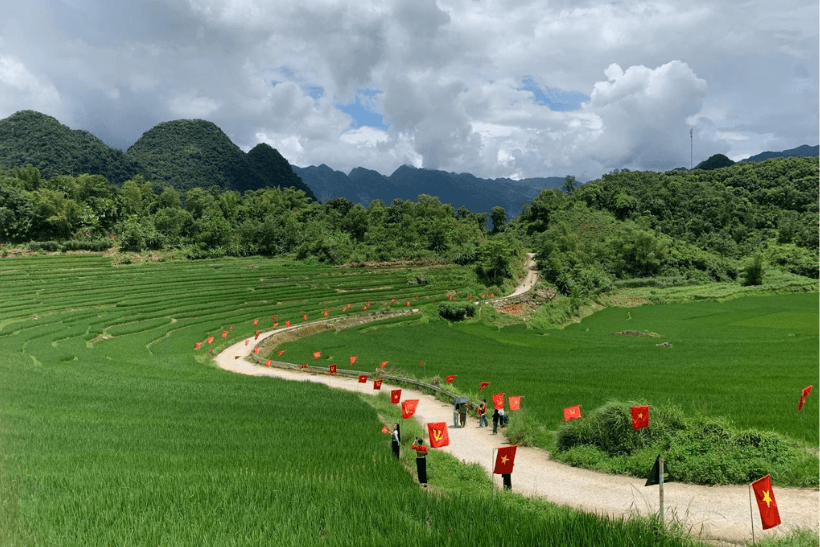
Rice field in Thanh Hoa province, Vietnam during the National Day. Photo by Ingrid Korving.
On July 1st, 2025, Vietnam consolidated its 63 provinces into 34 provinces and municipalities, while also eliminating district-level administration. This reform transitioned the country from a three-tier to a more streamlined two-tier governance model. At the same time, significant mergers were carried out within government ministries, as part of an ongoing effort to improve administrative efficiency.
With effect of March 2025, ministries were consolidated, from current 18 ministries to 14, aiming to reducing overlapping authority and increasing administrative efficiency. Some selected consolidation that may affect businesses include: The Ministry of Natural Resources and Environment (MONRE) and the Ministry of Agricultural and Rural Development (MARD) were merged to form a new Ministry of Agriculture and Environment (MAE); The Ministry of Planning and Investment (MPI) has been dissolved, with its functions (including overseeing foreign investment, business establishment, issuance of licenses to investors and businesses) being transferred to the Ministry of Finance.
These changes are part of a broader restructuring agenda aimed at modernizing governance, unlocking economic synergies, and enhancing fiscal sustainability. Seen as a strategic reset, this initiative is designed to support Vietnam’s long-term growth, with the ultimate goal of becoming a high-income nation by 2045. The structural changes are not only about efficiency but also about improving foundation for sustainable economic growth with a more business-friendly environment and better fiscal management.
Political and business landscapes changes
These recent reforms represent a major shift in both the political and business landscapes of the country with far-reaching implications for governance, public administration and private sector. The shift to two-tier governance model targets reducing bureaucratic inefficiencies, improving coordination between central and local governments and promoting decentralization by granting more autonomy to local authorities.
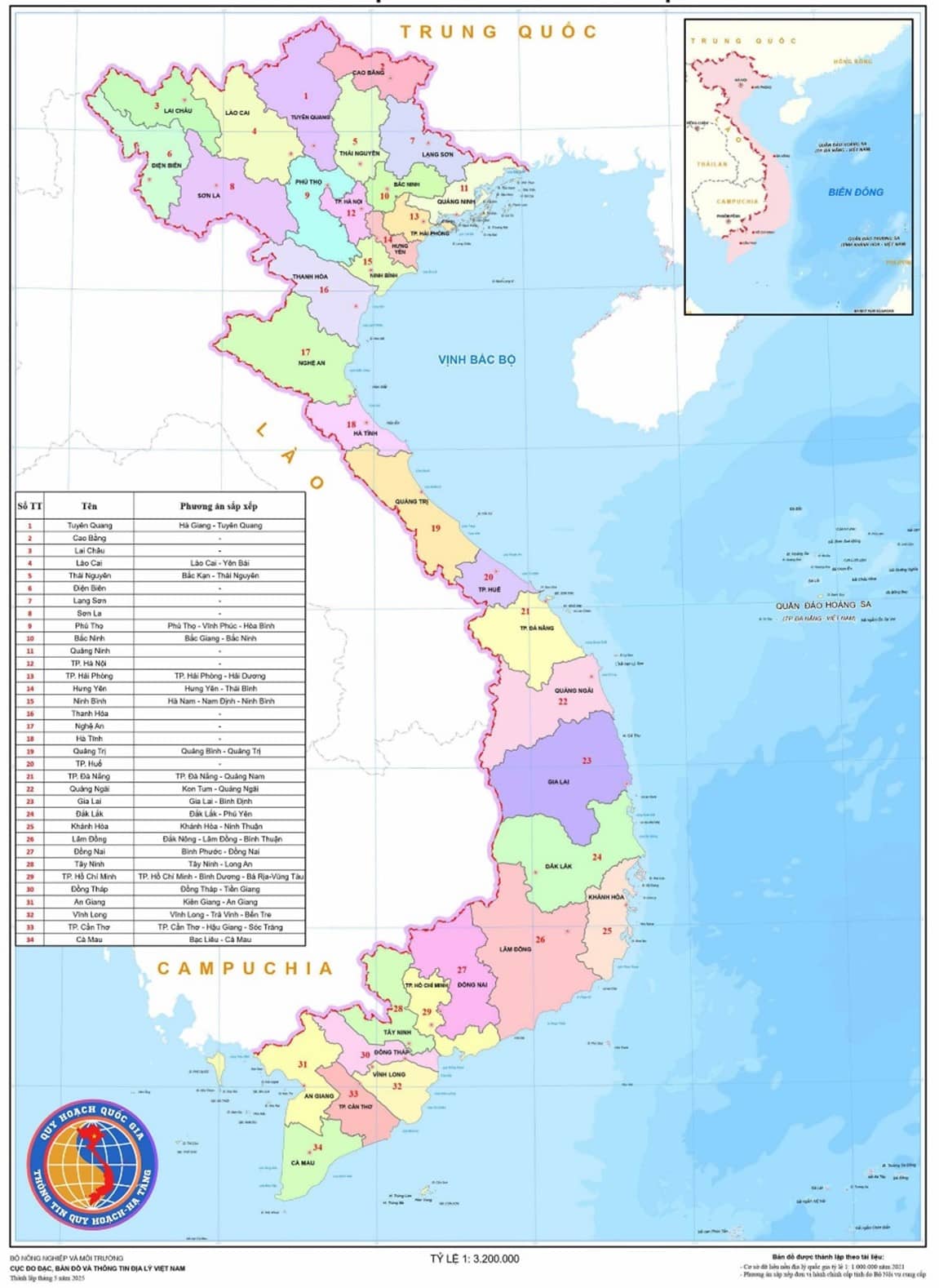
New map of Vietnam. Source: Vietnam Ministry of Agriculture and Environment.
For businesses, these mergers and consolidation are expected to bring about significant consequences, being enhanced business environment, cost savings and facilitated business expansion. With fewer ministries involved and enlarged provinces and regions, businesses may benefit from clearer and more consistent regulations across regions. The streamlined process could speed up administrative procedures for permits, licenses, approvals. Provincial consolidation could stimulate regional business hubs where business can benefit from shared infrastructure, workforce and greater access to markets.
The Mekong Delta, from 13 provinces, have been restructured into 5 provincial-level administrative units. These new localities share fertile plains in the Mekong basin and, notably, most of these localities have coastlines. The plain and the sea are dual advantages that the newly formed localities in the Mekong Delta must capitalise on and fully tap, to enhance its competitiveness, attract investment, and drive the economic development of the Mekong Delta region.
Impacts for businesses in the agriculture and food sector
The administrative reform in Vietnam is not a simple merge of provinces and ministries. It pushes many procedures down to provinces and communes (as district layers are removed). This means many permits and approvals used to be signed by line ministries, are now in hands of provinces or provincial departments. The government has stressed that, in an effort to cut red tape, ministries will issue guidance while the execution of a large share of procedures will be taken over by provinces.
Businesses in the agriculture–food sector typically deal with a variety of permits and approvals. With the merger of provinces and the shift to direct central–provincial governance, several responsibilities will be landed in provinces.
Some examples are granting fertilizer and feed business licenses, issuing food safety certificate, aquaculture pond registration etc. This development creates new weight on provinces, especially the newly merged, larger provinces. Long-term opportunities include stronger agricultural clusters, more efficient use of infrastructure. However, short-term friction is foreseen mainly due to instructions lag and capacity gaps. Many provincial officials are not yet familiar with procedures previously done at ministry level. For the implementation at provincial level, ministries need to issue guidance and even training to provinces. As for provinces, they may face staff reshuffling, under capacity. Therefore, delays in permits, confusion in navigation and uneven implementation among different provinces are all foreseen.
Beeld: © EKN Hanoi
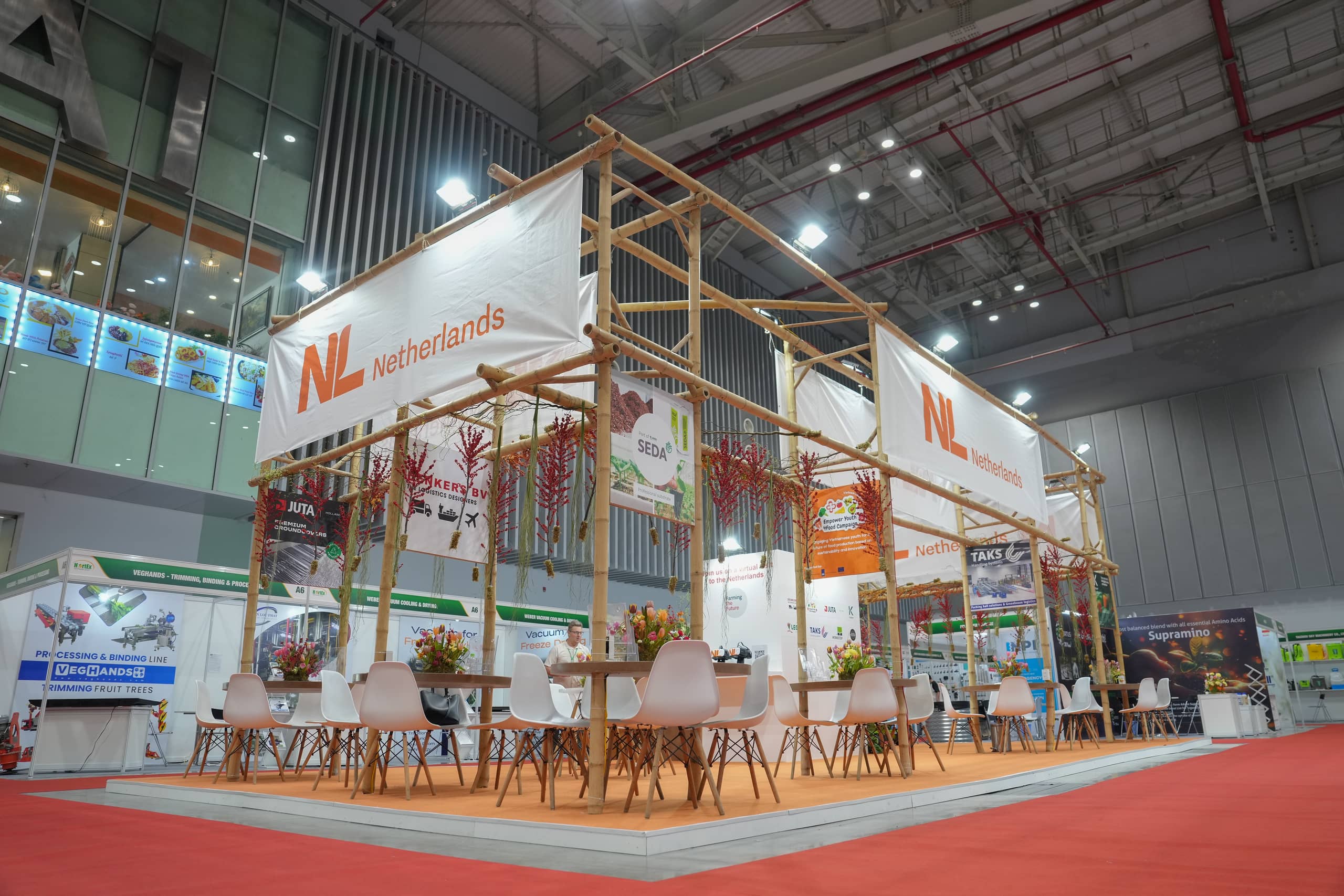
The Netherlands pavilion during HortEx Vietnam 2025. Source: EKN Hanoi
Practical advices to Dutch businesses
While the post-merger period in Vietnam presents several challenges, businesses that are proactive, adaptable, and well-informed can better navigate the potential delays and confusion. By strengthening local relationships, monitoring regulatory changes, planning for contingencies, anticipating longer approval times, and staying flexible, businesses can minimize risks and capitalize on the long-term benefits of the new governance structure.
The agricultural team in the Dutch embassy in Vietnam is always here to support Dutch businesses. Whether it is navigating regulatory changes, connecting you with the right sources of information or finding potential contacts, we are dedicated to facilitating you doing business in Vietnam.
Contact
Do you have any questions for the Agriculture Department at the Netherlands Embassy in Vietnam? If so, please send an email to HAN-LVVN@minbuza.nl. For the latest updates, news, funding opportunities and more, follow our LinkedIn: Netherlands Agricultural Network in Vietnam.