
China has been actively supporting the coastal regions in expanding arable land by sustainably reclaiming tidal flats and improving saline-alkali soils along the coastline. Several coastal provinces, for instance, Shandong, Jiangsu, Liaoning, Hebei provinces and Tianjin municipality, have undertaken efforts to convert underutilised tidal zones into fertile arable land.
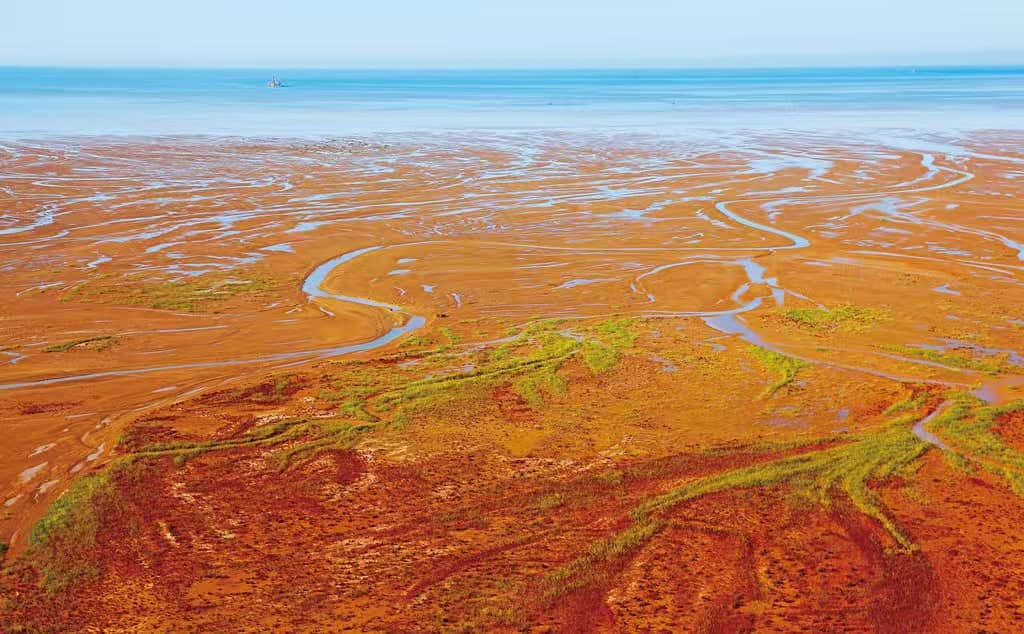
Beeld: © FrieslandCampina
Suaeda Salsa is part of a biodiversity project in Dongying, Shandong Province
These initiatives focus not only on increasing food production capacity but also on enhancing soil quality through eco-friendly techniques. By improving land use and promoting sustainable agricultural practices, China aims to strengthen food security while balancing environmental protection along its vulnerable coastal ecosystems.
Three-tier utilisation strategy
China has adopted a targeted, three-tier utilisation strategy to improve coastal saline-alkali land based on salinity levels:
- Light saline land (salt content < 0.3%) is primarily used for grain crops, oil crops, and feed crops.
- Moderate saline land (salt content 0.3%–0.6%) is designated for ecological grazing, herbal medicine cultivation, and salt-tolerant crops.
- Heavy saline land (salt content 0.6%–1%) focuses on vegetation restoration and ecological conservation.
To support this, China has developed an integrated improvement system combining engineering, biotechnology, chemical treatment, brackish water desalination, water-saving irrigation, and digital monitoring. These methods aim to lower and control underground brackish water levels and remove excess soil salinity, thereby improving soil structure and fertility.
Research, breeding, and cultivation
Beyond improving the quality of coastal saline-alkali soils, China is also investing heavily in the research, breeding, and cultivation of salt-tolerant crop varieties for the use at moderate saline land. The primary focus is on staple grains such as rice, wheat, soybeans, and corn, which are essential for ensuring national food security.
Researchers at the Chinese Academy of Tropical Agricultural Sciences studied coastal tidal flat plant resources in Hainan province. They identified several native vegetable species with strong potential for cultivation and commercial use., Plants such as Sea asparagus, Suaeda salsa, and Mesembryanthemum (literally translated ice plant in Chinese) have been successfully introduced to the consumer market. This marks a promising step toward expanding the diversity of salt-tolerant vegetables and enhancing food security.
From 2012 through 2022, salt tolerant rice, also called “sea rice” has started full production from laboratory trials. By the end of 2022, it was cultivated on over approximately 65 000 ha, across more than ten provinces and regions, including Heilongjiang province, Shandong province, Jiangsu province, Xinjiang province, Inner Mongolia province and Zhejiang province. In 2021, average yields reached 6 750 kg/ha, demonstrating that “sea rice” can thrive on all four major types of China’s saline–alkali soils and offering a viable way to expand productive farmland in coastal saline-alkali land and inland saline-alkali regions.
Additionally, China has conducted trial for salt tolerant soybean varieties in Shandong province, offering coastal farmers an additional, high value crop option.
Besides salt-tolerant crop varieties, China is actively engaged in the selection and breeding of salt-tolerant plants with the aim of exploring their potential as alternative vegetable sources.
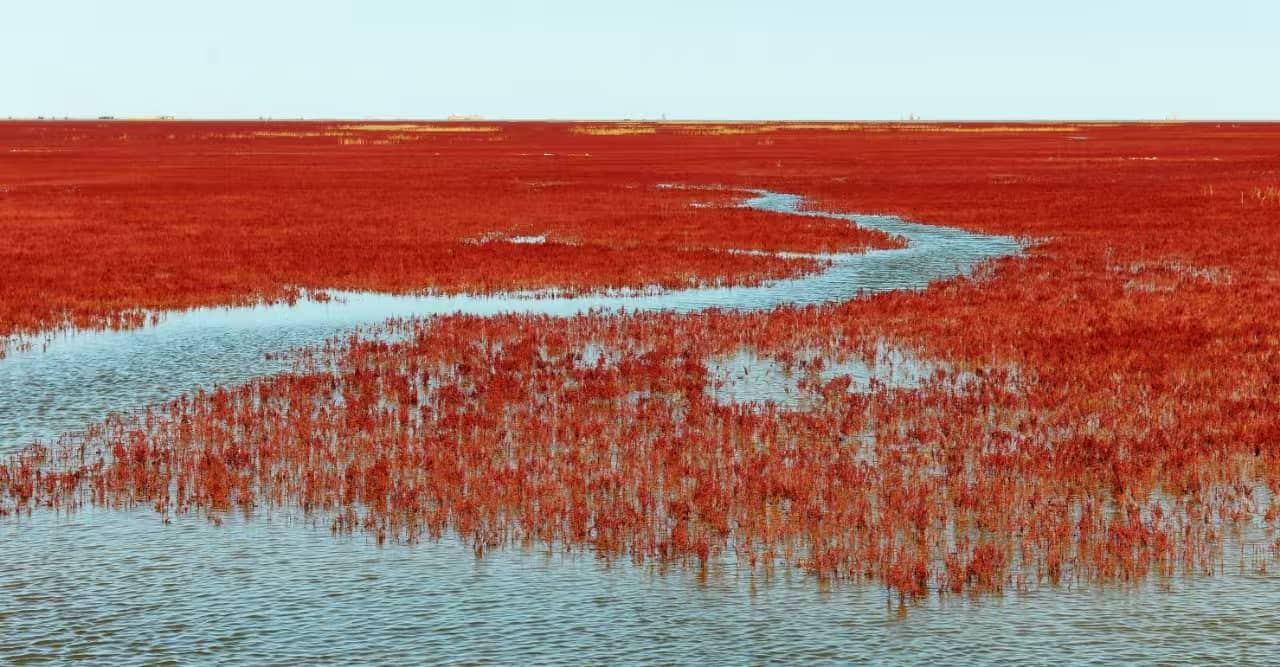
Beeld: © FrieslandCampina
Suaeda Salsa in Dongying, Shandong Province
Situation in the Netherlands
The Netherlands has similar salinity challenges in coastal regions. The Netherlands is adopting advanced drainage systems, breeding and cultivating salt-tolerant crops, and implementing intercropping systems and other technologies. These strategies align closely with trends in coastal saline-alkali land agriculture seen in China. The exchange of knowledge and practice between the two countries fosters international collaboration, offering valuable insights for sustainable agricultural management in saline-affected areas globally.
More information
For more information, you can reach out to the Netherlands Agricultural Network team in China via PEK-LVVN@minbuza.nl.