
In an effort to boost productivity, enhance competitiveness, and create well-paying jobs, President John Mahama has introduced Ghana’s 24-Hour Economy Strategy. This transformative initiative aims to keep the economy active around the clock, using time as a tool for growth. One of its eight key components is Grow24, an integrated agricultural transformation program designed to modernize and mechanize Ghana’s agricultural sector.
What is Grow24?
Grow24 is one of eight sub-programs of the Ghanaian Government’s integrated 24-Hour Economy Strategy that proposes a comprehensive overhaul of Ghana’s economy. The goal of the Grow24 sub-program is to rejuvenate Ghana’s critical agricultural value chains, driving food self-sufficiency, manufacturing, sustainable job creation, and climate resilience.
This government agenda has a clear reason: despite Ghana’s vast agricultural potential, the country spends over $2 billion annually on food imports. This gap is fueled by challenges like post-harvest losses exceeding 30%, limited irrigation (only 5% of arable land), and struggles of smallholder farmers with mechanization, ageing labor, and access to finance. As highlighted in the 2025 State of the Nation Address, these issues have suppressed productivity and value addition, exacerbating food inflation and undercutting economic growth. Grow24 is set to address this challenge by ensuring long-term food security in Ghana, reducing price volatility, strengthening local manufacturing, and uplifting rural communities along the way.
Revolutionizing agriculture for continuous productivity
Concretely, Grow24 proposes two flagship transformation initiatives.
Firstly is the Eden Volta Breadbasket Project . This project seeks to develop over 2 million hectares in the Volta Basin using irrigation and climate-smart practices. Through integrated agroecological parks equipped with modern facilities, the project aims to boost productivity in key crops by up to 130%, with anchor farmers leading production and value addition efforts.
"We cannot even think about transforming Ghana if we don’t put the right focus on Agriculture. We cannot succeed at anything if we do not first put food on the table at an affordable cost for our people" – Hon. Eric Opoku, Minister for Food and Agriculture.
The second initiative is the Shikpon Urban and Peri-Urban Farming Revolution. This initiative aims to establish peri-urban farming clusters around Ghana’s major cities, providing consistent and affordable fresh produce throughout the year. Covering 3–5 hectares per metropolitan area, these farms will utilize advanced methods such as greenhouses and micro-irrigation to cultivate high-demand vegetables. The programme will be led by youth cooperatives and agripreneurs, and it will incorporate cold chain logistics and digital marketplaces to improve distribution and strengthen market linkages. Fundamentally, these efforts are grounded in agroecological principles, including biodiversity, collaborative knowledge sharing, nature-based solutions, social and economic equity, participatory governance, and resilience.
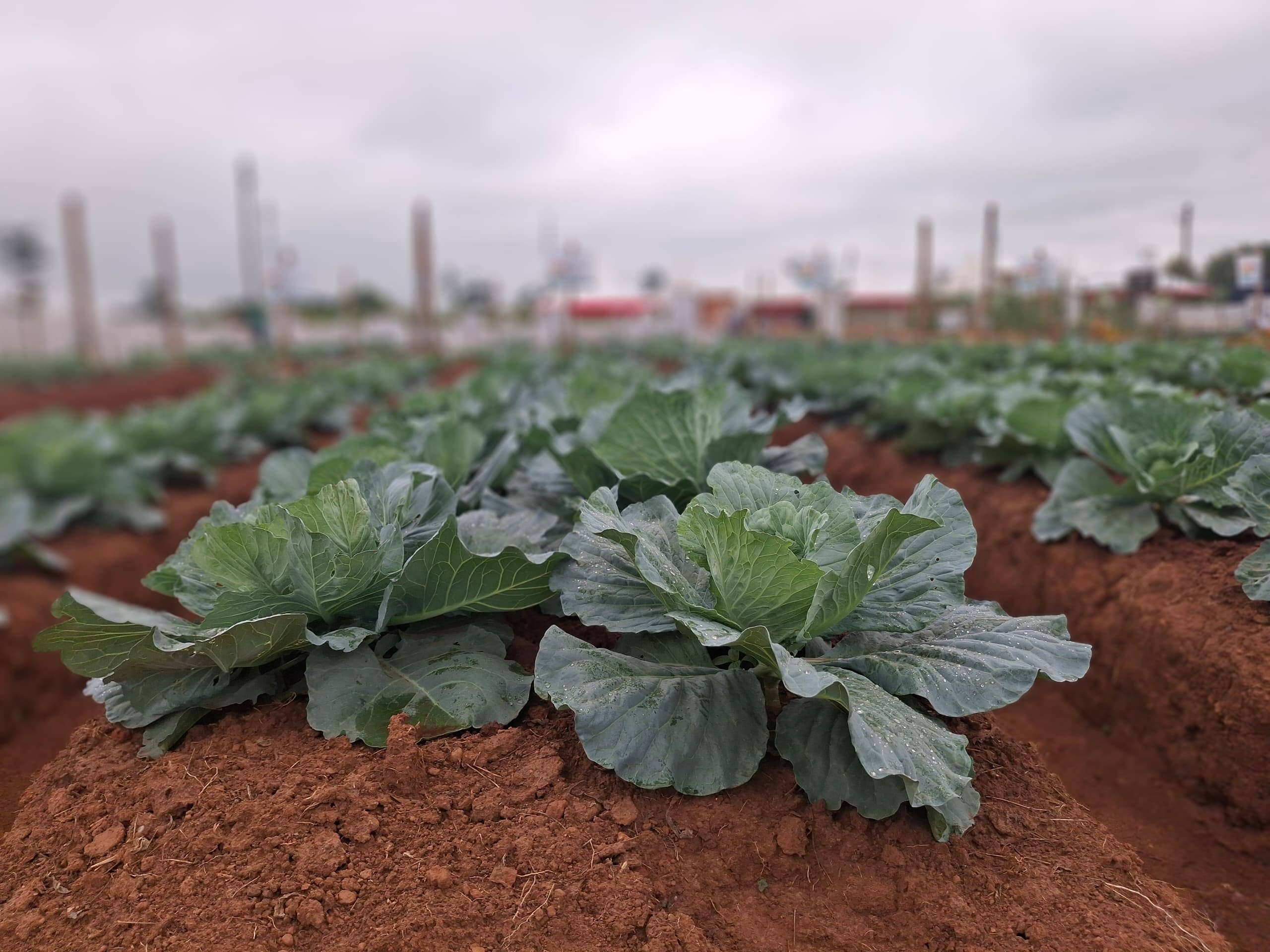
Cabbage growing in the field
Dutch partnerships: strengthening agricultural development in Ghana
These agroecology principles have been central to the ongoing collaboration and support from the Netherlands as a strategic partner to Ghana’s agricultural sector. Through long-standing collaboration with Ghana’s Ministry of Food and Agriculture and various local stakeholders, the Netherlands supports sustainable agricultural development via capacity building, innovation in climate-smart farming practices, and investment in infrastructure.
Furthermore, the Netherlands brings the agricultural expertise of Dutch businesses to the forefront of agricultural developments in Ghana. Ghana’s government has a clear private sector driven focus, favoring mechanisms such as public-private partnerships for sector-specific governance and many initiatives to make Ghana a more attractive investment destination. Whether it is building or operating peri-urban greenhouses, developing seed stock, or installing water-management systems, there are ample opportunities under the Grow24 banner that align with Dutch expertise.
"We aim to achieve food self-sufficiency through a policy that supports large-scale commercial agricultural production" – H.E. John Dramani Mahama, President of Ghana.
Synergies and future prospects
Further supporting the Grow24 agenda is the Feed Ghana Program, an all-encompassing strategy for agricultural modernization with both initiatives helping to transform the agricultural sector in Ghana.
The initiative represents a strategic shift in Ghana’s approach to agricultural development, offering more than just short-term gains. Its focus on targeted investments in horticulture—such as irrigation systems, improved seed varieties, and value chain integration, signals a commitment to long-term transformation.
By addressing systemic challenges while promoting innovation and market connectivity, Grow24 lays the groundwork for a more resilient, inclusive, and competitive agricultural sector. If effectively implemented, it could redefine Ghana’s role in regional and global horticultural markets, while improving livelihoods and ensuring greater food security.
If you want to know more about Grow24, you can find it in the 24HR Economy Handbook