
The Embassy of the Kingdom of the Netherlands in Colombia is supporting a new biodiversity initiative in Guaviare, Colombia. In collaboration with Tropenbos Colombia, the project focuses on restoring forest ecosystems, enhancing species diversity, and creating sustainable economic opportunities for rural women and communities.
Beeld: © Tropenbos Colombia
Strategic location: the Chiribiquete Buffer Zone
The project takes place in the Zona de Reserva Campesina La Guardiana de Chiribiquete, located near Colombia’s largest protected area, Chiribiquete National Park. This zone is part of the country’s deforestation front, an area where land-use pressure, ecosystem degradation, and illegal activities intersect. The region is inhabited by approximately 300 families. As part of a local land-use planning process, these communities are currently defining conservation and restoration zones. Access to native plant material is a key constraint in advancing these efforts. This project seeks to address that gap.
A collaborative approach to landscape restoration
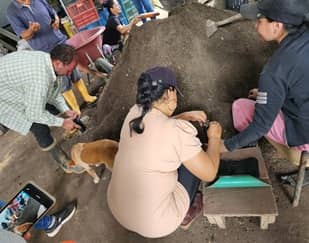
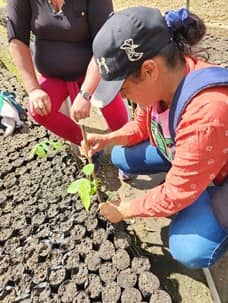
The initiative will establish 6 to 8 community nurseries, managed collectively by rural women. Each nursery will produce at least 2,000 seedlings of 20 to 30 native species, including both timber and fruit trees. The selection of species will be led by the communities themselves, based on local knowledge and priorities.
The project aims to increase biodiversity in restoration activities by expanding the range of native species used in reforestation. It will provide high-quality plant material suitable for both ecological recovery and productive agroforestry systems, particularly those based on cacao. In doing so, it also seeks to generate sustainable income for local communities.
A key component is the strengthening of women’s leadership and organizational capacity through their central role in nursery management and decision-making. Additionally, the initiative will foster a solidarity-based local economy by encouraging collective seedling production and distribution, reinforcing cooperation and shared value among participating families.
Productive, participatory, and biodiverse restoration
One of the project’s key features is its commitment to productive, participatory, and biodiverse restoration. By integrating agroforestry and ecological restoration, the model allows cacao to serve as an anchor crop, while a diverse range of native trees contributes to long-term ecosystem recovery. Up to 30% of restored areas may allow for sustainable use, enabling communities to benefit economically while supporting conservation goals, a clear example of restoration that is both ecologically and economically productive.
Beeld: © Tropenbos Colombia
A major challenge in forest restoration is the availability of high-quality, diverse planting material, especially in degraded landscapes. To address this, the project adopts a participatory approach by engaging Indigenous youth and local forest experts in identifying and collecting seeds from remaining forest patches and traditional seed banks. This process not only ensures ecological relevance and genetic diversity but also recognizes and strengthens local knowledge systems that are often undervalued in top-down restoration efforts. The result is truly biodiverse restoration, rooted in the understanding that forest recovery means restoring ecological complexity, not creating monocultures. Each nursery will cultivate a wide variety of native species, reflecting the unique characteristics of surrounding ecosystems and supporting resilience over time.
Why women are central to this project
The nurseries will be managed by organized groups of rural women who have chosen a collective approach rather than individual efforts.
“This model enhances shared responsibility, risk management, and peer learning, while elevating women’s leadership in local environmental governance,” explains Carlos Rodríguez, director of Tropenbos Colombia.
Dutch–Colombian environmental cooperation
Carlos Rodríguez, director of Tropenbos Colombia, notes that “The Netherlands has supported forest governance and restoration in Colombia for over 50 years. From the radar mapping of the Amazon in the 1970s, to projects in the coffee region and in the Pacific, Dutch expertise has contributed to science-based, participatory approaches to land management.”
Tropenbos Colombia, part of the global Tropenbos network, a long-term partner of Dutch cooperation, has been conducting research and field implementation in Colombia for over four decades. It has played a central role in shaping policies and practices around ecological restoration, combining scientific research with intercultural dialogue and community engagement.
The Embassy continues to support projects that integrate biodiversity, climate resilience, and inclusive development, core priorities of Dutch foreign policy.
A scalable and sustainable approach
Colombia has set an ambitious goal of restoring over 700,000 hectares of degraded land. Although relatively small in scope, the project demonstrates a high-impact model that combines biodiversity conservation with social inclusion and rural development. It links short-term economic benefits (via agroforestry and nursery activities) with long-term ecological outcomes, aligned with both national and international restoration frameworks.
By focusing on rural women, local governance, and biodiversity, the project contributes to key Dutch foreign policy objectives: climate adaptation, inclusive growth, and environmental sustainability.
More information
If you would like to know more about theses initiatives or want to get in touch with the Agricultural & Biodiversity team, please contact us on bog-lvvn@minbuza.nl (for Colombia and Ecuador) or lim-lvvn@minbuza.nl (for Peru).
For more general information, you can visit the home page.