
How Colombia and the Netherlands are working together to align trade and sustainability
Beeld: © Solidaridad Colombia
Forum on implementing the EUDR
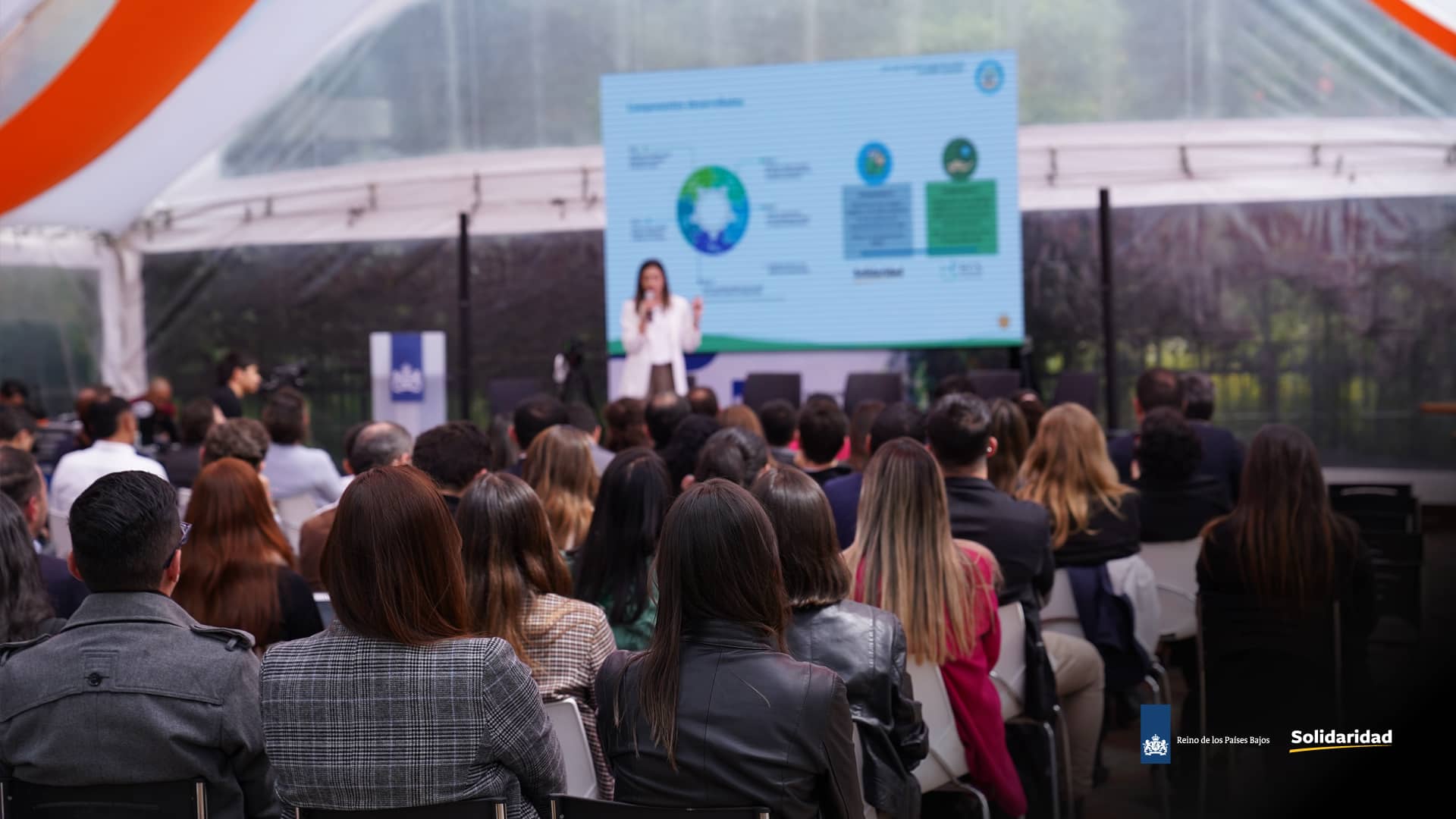
The Embassy of the Kingdom of the Netherlands in Colombia, in partnership with Solidaridad, hosted the forum “Implementing the EUDR: Tools and Solutions for the Colombian Context”. Held at the Ambassador’s Residence, the event brought together over 80 participants from the public sector, private companies, producer organizations, and international cooperation agencies. The objective: to exchange perspectives, align strategies, and identify practical solutions for implementing the EU Deforestation Regulation (EUDR) in Colombia’s coffee, palm oil, and cocoa supply chains.
The Netherlands and the EU are committed to ensuring that trade and sustainability go hand in hand. As Ambassador Reina Buijs stated in her opening remarks, deforestation-free supply chains are not only a European priority—they are a shared responsibility. Cooperation between governments, businesses, producers, and civil society is essential. The EUDR should be seen not as a barrier, but as a catalyst for transparency, legality, and rural development.
Beeld: © Solidaridad Colombia
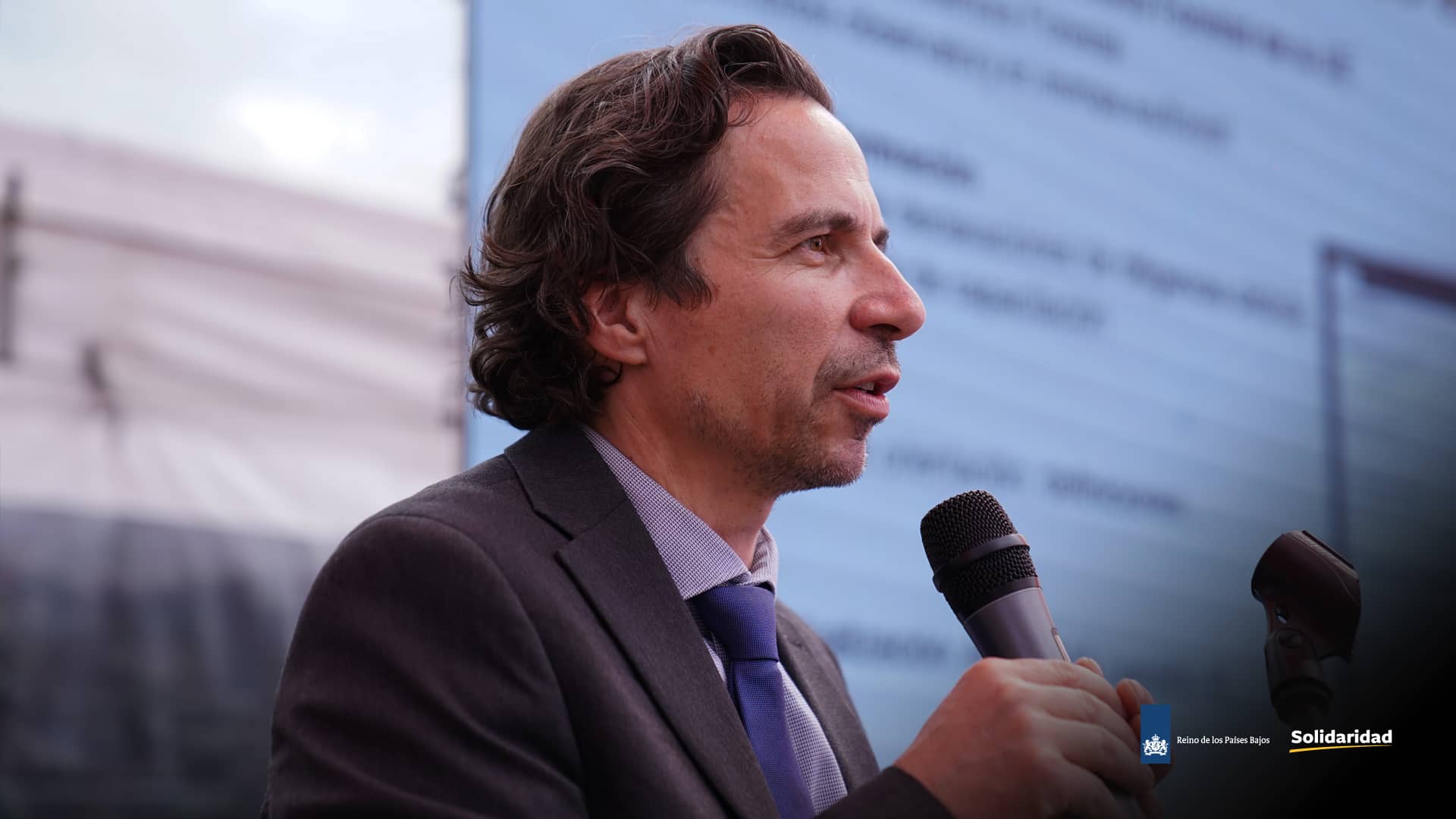
The forum addressed the regulatory implications of EUDR, including the due diligence requirement and the obligation to demonstrate legality and deforestation-free production. As Erik Dhaenens from the EU Delegation explained, this framework is not designed to punish producers, but to support long-term structural change.
Beeld: © Solidaridad Colombia
Erik Dhaenens from the EU Delegation in Colombia.
Coffee panel
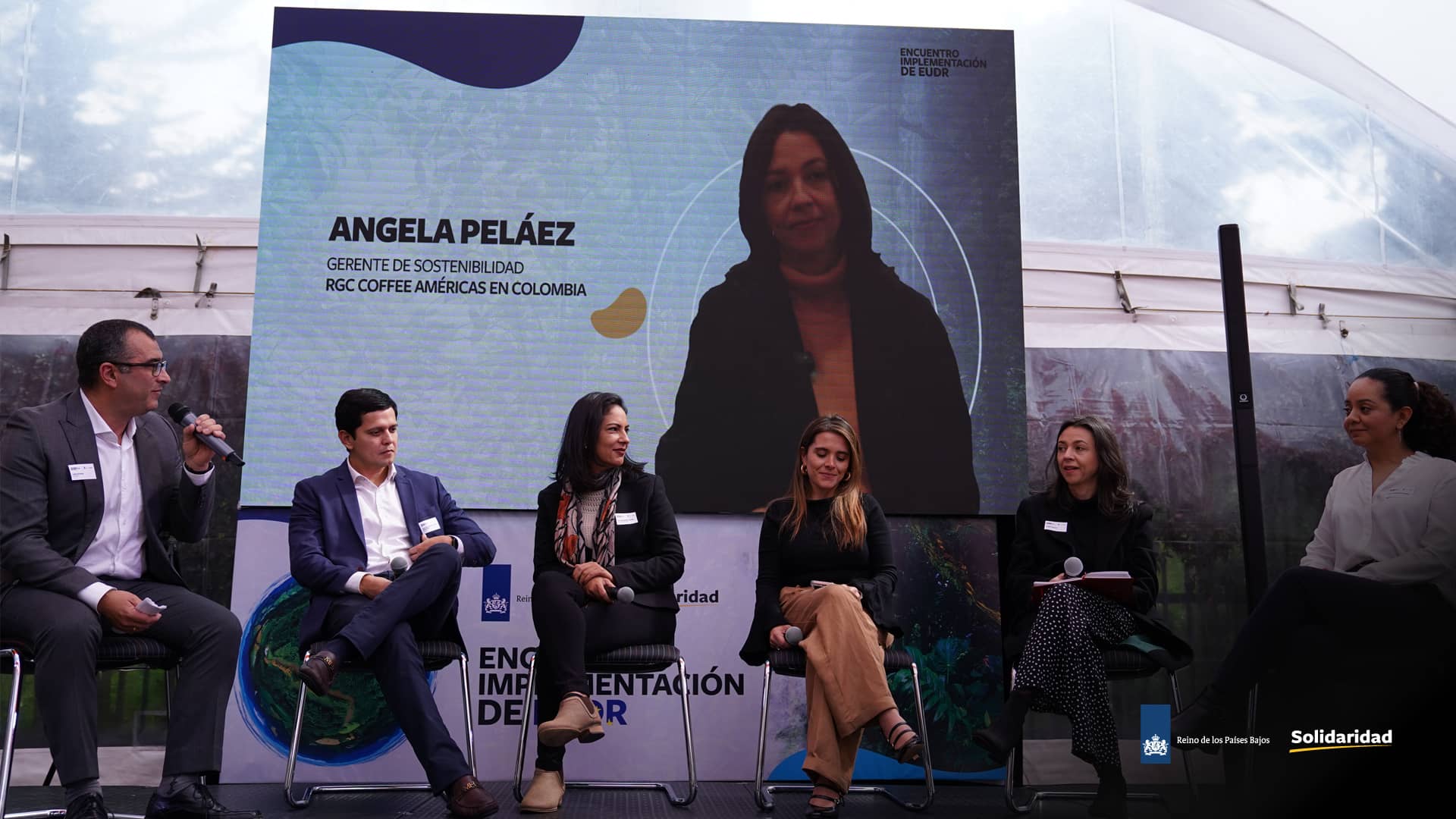
The first panel focused on coffee. Solidaridad presented its EUDR Implementation Guide, created under the Coffee, Forest & Climate Agreement, which provides concrete steps for exporters and producers to align with the regulation. Industry representatives from Asoexport, ECOM, RGC Coffee, and GIZ emphasized the need for a unified approach. Key challenges include coordination among exporters, institutional alignment, and engagement with non-organized smallholders. There is a clear need for better communication strategies and shared tools to ensure all actors receive the same guidance.
The message was clear: traceability is not just a technical requirement—it must be part of a broader effort to empower producers. Turning farmers into entrepreneurs is critical. Without clear incentives and support, many producers may prefer to sell to intermediaries, remaining disconnected from long-term market opportunities.
Beeld: © Solidaridad Colombia
Coffee panel.
Palm oil and cocoa panel
The second panel, covering palm oil and cocoa, highlighted Colombia’s relatively advanced status in legal and formal palm oil production. Companies such as Palmar del Oriente and Palmas de Tumaco, along with Fedepalma and Fedecacao, shared their progress on certification and traceability. The cocoa sector, meanwhile, presents an opportunity for both environmental and social impact. Expanding legal cocoa cultivation in former deforested or illicit-use areas could help replace unsustainable practices and contribute to Colombia’s rural development goals.
One crucial question emerged: How can Colombia ensure that its past does not invalidate its future? Restoring trust in deforested areas and re-integrating them into legal, sustainable production must be part of the national strategy.
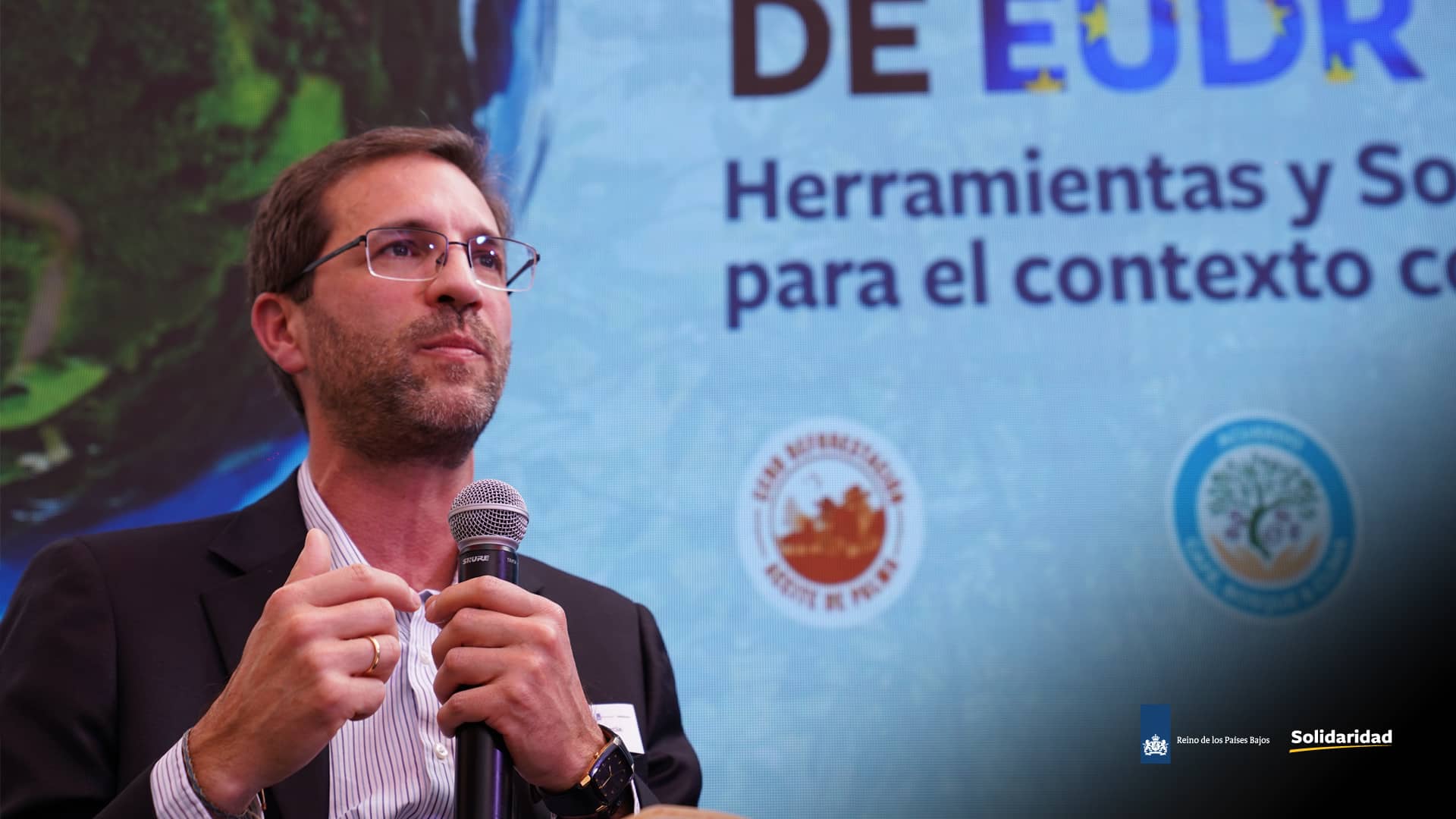
Beeld: © Solidaridad Colombia
Andrés Felipe García, Fedepalma.
What is the way forward?
The forum concluded with a discussion led by Joel Brounen, Country Manager of Solidaridad Colombia. The way forward requires alignment. Collective solutions to reduce duplication and lower transaction costs. Stronger articulation between government policy and private-sector action. Better coordination with international cooperation partners.
Implementing the EUDR is a complex task—but also a valuable opportunity to strengthen Colombia’s position in sustainable trade. Dutch organizations like Solidaridad Colombia are actively promoting sustainable agricultural practices, with a strong focus on empowering smallholder farmers. The Netherlands is committed to supporting this transition. Through collaboration Colombian products will continue to access European markets under fair, legal, and sustainable conditions.
More information
If you would like to know more about theses initiatives or want to get in touch with the Agricultural & Biodiversity team, please contact us on bog-lvvn@minbuza.nl (for Colombia and Ecuador) or lim-lvvn@minbuza.nl (for Peru). For more general information, you can visit our country pages here.