
The ministry’s report including the 2019 main results of the agricultural, fisheries and food sectors, analyzed from the economic, social and environmental point of view was presented.
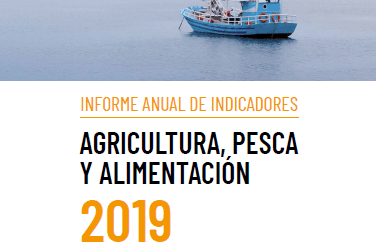
As at the end of each year, the Ministry of Agriculture, Fisheries and Food presents its Annual Indicators Report, which analyses the main figures of the different Spanish agro-food sectors.
In this 2019 edition, the report is structured in four large blocks.
1. Physical and Territorial Environment
The first block, related to the Physical and Territorial Environment (pages 18 to 81), consists of the following chapters:
- Population, territory and land occupation.
- Water and soil: resources and their relationship to agricultural activity.
- Energy in the agro-food and fishing sectors.
- Air quality: characterization and relationship with the agricultural sector.
- Biodiversity and agricultural landscapes.
One of the highlights of this section shows that 16.1% of the Spanish population (7.6 million people) lives in rural areas, occupying 84.1% of the national territory. The average population density in the so-called rural areas is 17.8 inhabitants/km2.
Regarding land use and occupation analysis (Table 1), Spain has a total area of 50.6 million hectares (505,989 km2), of which 39.7% are wooded, shrub and bush areas (20.1 million hectares). This is the most important land use, having also been the area with the greatest increase in the last 10 years.
Next are the lands dedicated to crops, with 16.7 million hectares (ha), 33.1% of the country's total area. The third most important use is pastureland, with 6 million ha, 11.8% of the total.
Table 1. Distribution of surface area according to large groups of uses in Spain
The region with the largest crop area is Andalucía, with 3.8 million ha. The region with the largest area of pastureland is Castilla y León, with 2.4 million hs, and the region with the largest forestry area is Castilla-La Mancha, with 3.3 million hs.
As far as the irrigated land in Spain is concerned, it amounts to 3,828,747 ha, 1.4% more than in 2018. Figure 1 shows the evolution of the irrigated area by type of crop.
Fig. 1. Irrigated land evolution by crop type in Spain
With regard to soil erosion, the regions most affected (soil losses exceeding 25 tons/ha/year), are Andalucía, Cataluña, Cantabria, Murcia and Navarra, with percentages higher than 15% (Table 2).
Table 2. Surface affected by erosion by region
On the other hand, the consumption of nitrogen and phosphate fertilizers has remained constant in Spain between 2013 and 2018. The study also includes information on agricultural practices linked to soil conservation.
Below are the main figures for the agricultural sectors in terms of energy in 2018:
Also included are energy comparative consumption data with respect to the rest of the EU Member States (Figures 2, 3 and 4).
Fig. 2. Direct energy use in the agricultural and forestry sector and its share in final consumption
Fig. 3. Direct energy use in the fisheries sector and its share in final consumption
Fig. 4. Direct energy use in the food industry and its share in final consumption
2. Productive Sectors
The second block (pages 85 to 155) offers the socioeconomic perspective of the Productive Sectors of interest: agriculture and livestock, deepening into indicators linked to farms, fishing and aquaculture, and the food industry, along with their participation in terms of employment in the national economy.
It then analyses economic indicators of the implementation of the CAP, via EAGF and EAFRD, of the agricultural insurance policy and of the situation of taxation and financing of the agro-food sector.
As the main macro magnitudes, the report points out that Agricultural Income reached 26,234 million Euros and Fishing Income was 884 million Euros, while the 31,000 companies of the food industry had a total turnover of 120,000 million Euros.
3. Agrifood Markets and Marketing
The third block (pages 164 to197) analyses Agrifood Markets and Marketing through the main price indicators and food consumption and distribution trends in the domestic market. This block thus provides the information that complements the production cycle, whose objective is to reach its final recipients through marketing.
Among other noteworthy data, this block points out that the balance of foreign trade in agrifood and fishing reached its historical record in 2019, with a surplus of 14,215 million euros (Table 3).
Table 3. Evolution of agro-food exports and imports in Spain
4. Monographic Reports
The last block (pages 207 to 215), called Monographic Reports, deals with two topics of current importance, such as the programming of the new CAP, through the Strategic Plan, and the food chain policy.
The full report in Spanish can be found here https://bit.ly/3qJoDma
Source: Ministerio de Agricultura, Pesca y Alimentación