
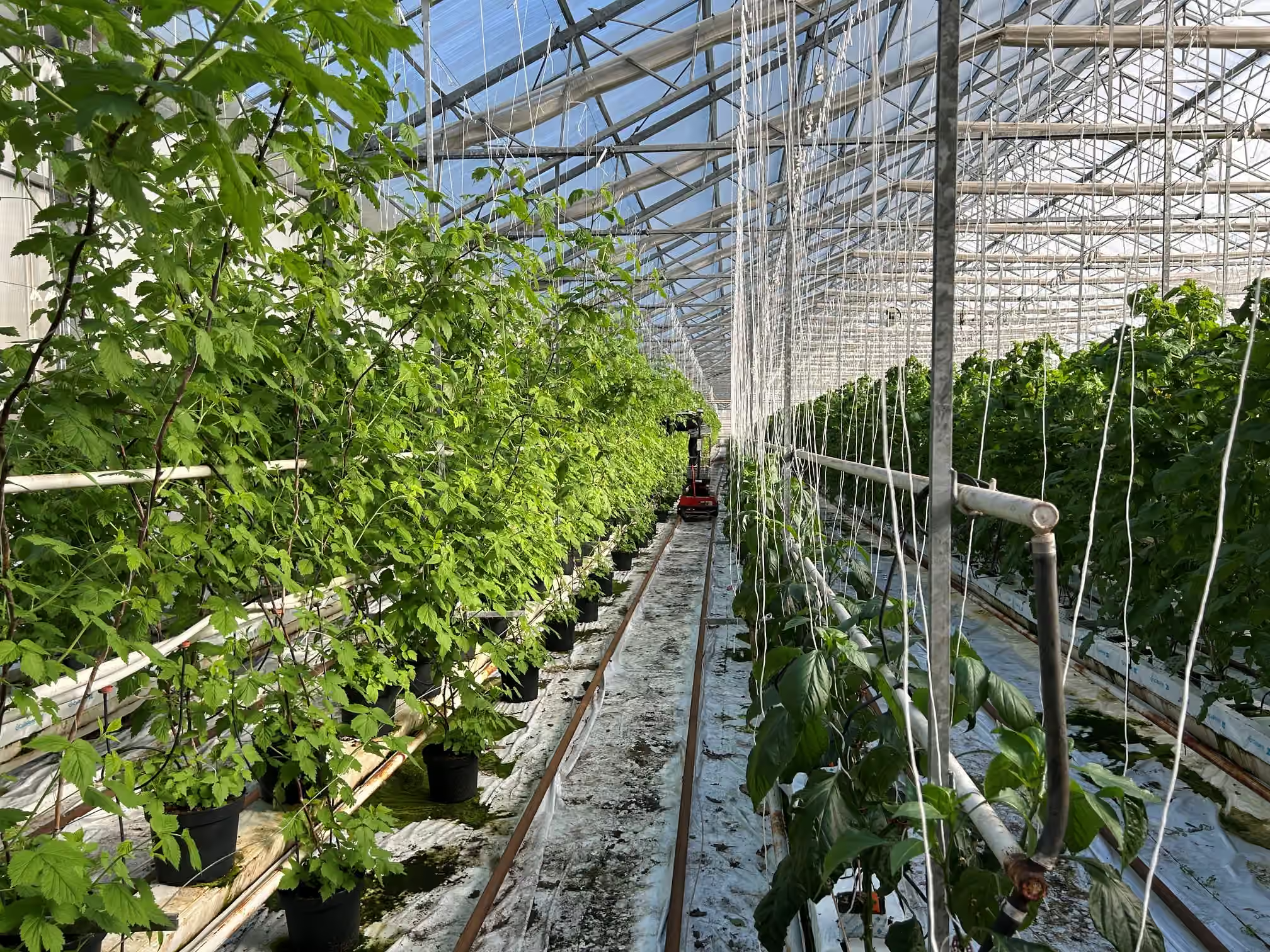
Sweden and Norway look to the Netherlands for greenhouse innovation
Energy, automation, and controlled-environment agriculture
Sweden and Norway want to increase domestic food production and reduce strategic dependencies. Challenging growing conditions, high labor costs, and the need to use energy more efficiently are driving interest in greenhouse technology, automation, and circular production. The Netherlands Agricultural Network (LAN) team for Scandinavia, which is based in Copenhagen, connects Dutch companies and researchers with Swedish and Norwegian partners exploring opportunities, from greenhouses using industrial waste heat to lighting systems for Arctic conditions.
Challenges facing the food chain, including geopolitical instability and the pandemic, have prompted the Swedish and Norwegian governments to strengthen competitiveness and increase domestic food production. Defense strategy and strategic autonomy have become part of the discussion, since food production, availability and distribution must continue during crises, while agricultural activity helps sustain communities in remote areas. Both countries face challenging conditions, including sparsely populated areas, cold and snowy winters with little sunlight, long summer daylight hours, and rocky soils that limit suitable farmland. These conditions can also accelerate innovation.
Sweden updated its National Food Strategy 2.0 in 2025, following a dialogue with businesses and organizations across the food supply chain. The strategy places profitable businesses at the heart of building resilience and identifies research, innovation, and digitalization as ways to improve efficiency and productivity. Under this framework, government funding is increasingly directed toward more robust domestic food production as well as research and innovation at all stages of the food chain. Examples include support for food-supply and drinking-water preparedness, the RISE-led SPIRA project to strengthen small food processors, and Formas’s Applied Research for a Competitive Food Sector and Sustainable Transitions program.
Norway aims to become 50% self-sufficient in agricultural products by 2030. The target is adjusted for imported animal feed, so production relying on imported feed is not counted as entirely domestic. Its efforts focus on supporting domestic production, protecting agricultural land, stimulating precision agriculture and automation, and strengthening research and innovation, for instance in controlled-environment production.
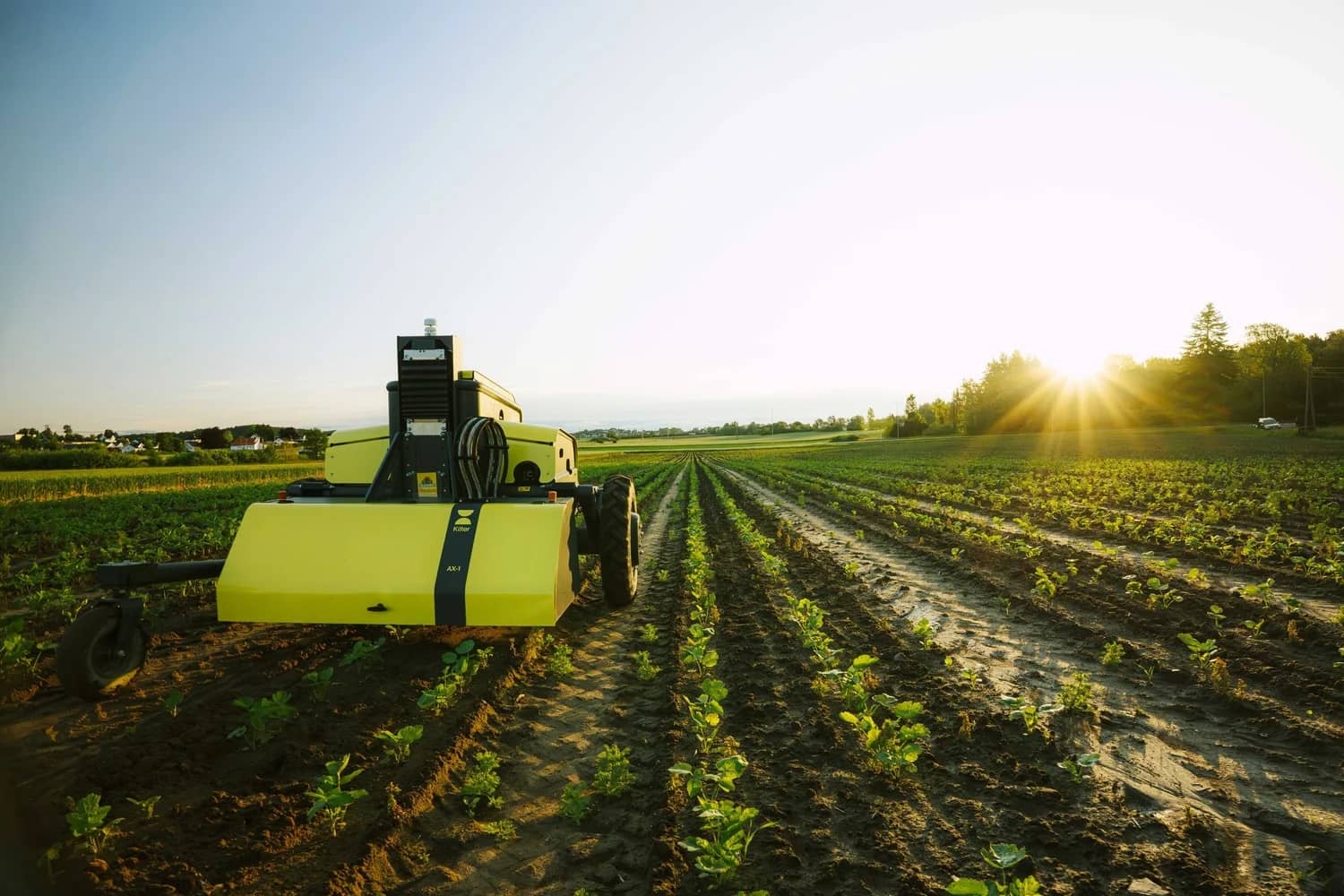
Kilter, a Norwegian AgTech company, is one example of innovation in precision spraying. It developed an AI-powered autonomous robot that uses millimeter-precise micro-droplet technology to eliminate weeds with up to 97% less herbicide. By boosting high-value vegetable yields and cutting manual labor, this technology allows farmers to maximize production on limited arable land. Kilter is part of the incubator Aggrator in Ås, which acts as a growth partner for companies within agrifood tech and environmental technology. Incubators like these create a research and innovation ecosystem that helps start-ups to succeed in the field of AgTech and boost Norway’s competitiveness in technological innovation in sustainable agriculture.
Beeld: © Kilter
Kilter autonomous field robot for plant-level weed control (Langhus, Norway)
Northern conditions drive technological change
Norway and Sweden are among Europe’s five least densely populated countries. Compared with the Netherlands, Sweden is about 11 times larger and Norway about nine times. Over the longer term, climate change may create opportunities: extended growing seasons could enable farmers to increase yields from open-field crops and grow farther north, particularly in regions close to the Arctic Circle.
The challenge is to increase food and feed production while facing constraints related to land, energy, water, labor, and climate. The focus is therefore shifting from simply increasing production toward system innovation, such as locating greenhouses alongside industrial facilities rather than building isolated greenhouses. That may also require changes to local zoning rules, shared arrangements for energy costs, and supply chains that use municipal waste as a resource for food production. Technology, digitalization, automation, circular production, and new production methods are becoming more important. Innovation is no longer limited to the farm or production facility: opportunities increasingly lie in connecting sectors and value chains.
‘Challenging conditions can also accelerate innovation’
The specific circumstances of the High North are increasing the need for innovations. In greenhouse production, for example, sparse populations and high labor costs make labor a limiting factor. The need for robotization is therefore high, and investments may pay off sooner.
Other technologies precisely control lighting for bumblebee pollination or the number of light hours; electricity can be relatively inexpensive in some northern areas, although prices vary by region, as Nord Pool’s bidding-area data show. Larger sites in Scandinavia may also make it easier to test certain robotic technologies at scale. In the Netherlands, there is less demand for these large-scale applications, making the investments harder to justify.
Industrial waste heat creates greenhouse opportunities
Industrial symbiosis is receiving growing attention. Food and feed production in greenhouses, land-based aquaculture facilities, and insect and mycoprotein production can be combined with industrial plants or data centers to use residual streams such as heat and CO₂.
Lennart Knot of FoodVentures, a Dutch greenhouse operator active internationally, has gained experience with alternative energy systems in Scandinavian greenhouse horticulture by growing tomatoes in Sweden using residual heat. Instead of exporting vegetables from the Netherlands, such projects bring Dutch high-tech greenhouse expertise and systems to the production site. Knot points out that cheap electricity and the availability of residual heat are only part of what makes a project successful. There also has to be a market, and regulations must be favorable. In Norway, for example, seasonal import duties on fruits and vegetables, including tomatoes, cucumbers and berries, can affect the business case.
According to Knot, joining a project as an operator at an early stage is important to ensure decisions are based on practical experience. Such projects require a long-term perspective, as their investment returns tend to materialize over a longer horizon and may initially be lower than those of more traditional investments.. Access to favorable financing, including subsidies and (soft) loans specifically designed to support sustainable investments, can considerably strengthen the investment case and improve expected returns. These projects also need investors and reliable agreements on where the produce will be sold. At the same time, the IPCC reports that Europe’s agroclimatic zones have been shifting northward, potentially increasing the suitability of Sweden and Norway for some forms of food and feed production.
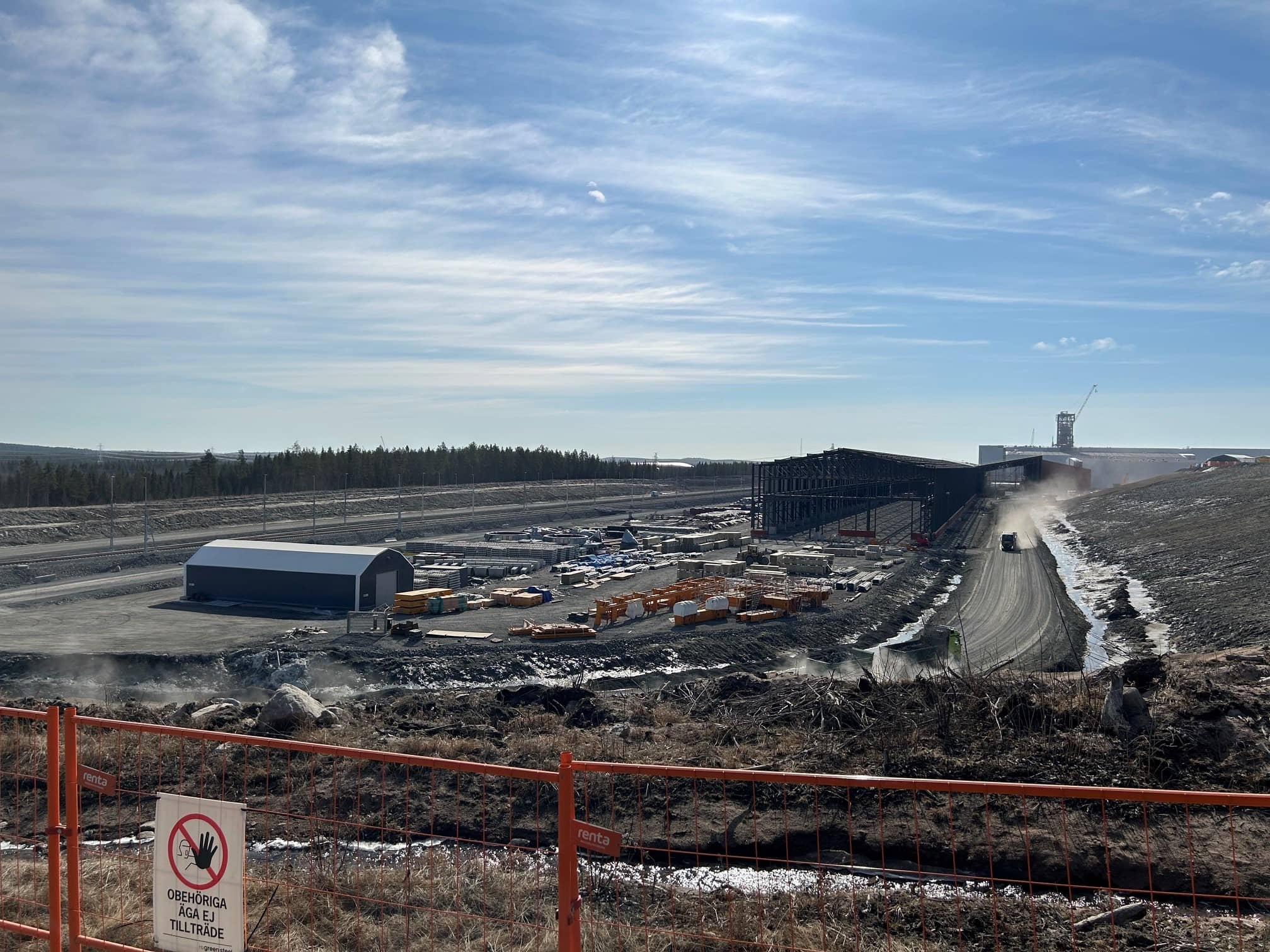
Building site Stegra green steel plant where they look for industrial symbiosis opportunities with food production (Boden, Sweden)
Research into Arctic greenhouse lighting
A Seed Money Project (SMP) funded by the former TKI Horticulture & Starting Materials involves the Natural Resources Institute Finland (Luke), Wageningen University & Research and several other stakeholders. It examines the synchronization of energy use and dynamic lighting in greenhouse horticulture both under Dutch and Arctic conditions sharing similarities, differences and identifying opportunities to work together in both regions.
According to researcher Huub Kerckhoffs, the project will provide valuable information for potential activities in controlled-environment agriculture in the North; several knowledge exchange activities have already been organized and a Dutch/Finnish network was established to coordinate future projects. The LAN team supported the funding application through a letter from the Dutch Embassy in Finland and shared its experience at a Finnish-Dutch workshop. It continues to follow the project and exchange knowledge with the partners.
Dutch and Scandinavian partners
The LAN team in Scandinavia has seen interest from Swedish provinces in the Dutch high-tech greenhouse sector. In January 2024, an AgTech Invest delegation from Business Sweden and the Swedish regions Norrbotten, Västernorrland, Värmland, Västra Götaland and Blekinge visited the Netherlands to explore this expertise. The LAN team subsequently commissioned a market report on the opportunities for the Netherlands on greenhouse horticulture and CEA in Sweden and is working on follow-up activities with the horticulture sector. During GreenTech Amsterdam 2026, the team organized a networking session at which the report was presented and Invest in Norrbotten outlined plans for industrial symbiosis involving food production. The session generated discussions and new contacts.
Furthermore, during a visit to the Norrbotten region in northern Sweden, the LAN team learned more about regional initiatives to expand food production near the Arctic Circle and made new contacts. The region offers opportunities to combine food production with industrial residual heat and renewable energy.
In Norway, there is also interest in cooperation with the Netherlands, particularly among data center developers that can link their residual streams to food production. The LAN team met with Norwegian data center developer Arcem, together with Netherlands Enterprise Agency (RVO) and the Dutch Embassy in Oslo, to explore connections with Dutch companies. Dutch parties have subsequently met with Arcem. Both Sweden and Norway are looking for knowledge, technology, investors and skilled entrepreneurs and offer a business-friendly environment, guidance through administrative procedures, and efforts to remove barriers.
‘The opportunity is to co-develop solutions’
From exports to joint innovation
The central question is which Scandinavian challenges Dutch expertise can help address, which solutions can be developed jointly and what the Netherlands can learn from Scandinavian experiences. The opportunity is not simply to export Dutch technology, but to co-develop solutions. To take advantage of the possibilities, stakeholders need to look beyond traditional exports and explore partnerships, co-innovation, and joint investments. The LAN team will continue to follow developments and connect potential partners as opportunities arise. Parties interested in opportunities in Sweden and Norway can contact the team.
More information
If you would like to know more about high-tech greenhouse development in Sweden or using waste heat from Norwegian data centers for food production, you can visit the country page of Scandinavia on this website. You can also send an email to the LAN team at the Dutch Embassy in Copenhagen: kop-lvvn@minbuza.nl.