
Minister Silvio Erkens wants the Netherlands to become the Silicon Valley of Agri&food Innovation
Dutch agrifood innovation agenda targets global AgTech leadership
With its new Agrifood Innovation Agenda, the Dutch government aims to accelerate innovation in four areas of agriculture and food production. Minister for Food Security, Fisheries and Horticulture (LVVN) Silvio Erkens wants to attract more private investment, remove barriers for innovation, and strengthen international cooperation. He sees a key role for the Netherlands Agricultural Network (LAN) in connecting Dutch innovators with partners and investors abroad.
Minister for Food Security, Fisheries and Horticulture Silvio Erkens
‘The Netherlands leads the world in agricultural innovation, but our position is under pressure,’ Erkens says. ‘China, the United States, and other countries are investing heavily. If we want to stay ahead, we must make choices.’ In his view, the government has spread its efforts too thin in recent years. ‘We pursued almost every promising idea. Now we need to decide where we really want to lead and focus our efforts on accelerating innovation in those areas.’
Four areas of focus
The Dutch agrifood innovation agenda prioritizes AgTech, food innovation, resilient crops and cropping systems, and (greenhouse) horticulture. According to Erkens, the four areas were selected based on the Netherlands’ existing strengths and their potential to drive economic growth and deliver wider benefits to society. ‘Start with what you do well, then build on it.’
‘The Netherlands is in a strong position to become a global leader in agricultural AI’
AgTech includes agricultural robotics, digital technology, and artificial intelligence. Erkens sees promise in AI applications. ‘Most of the major general-purpose AI models come from the United States. But the race to apply AI across different industries is still wide open. The Netherlands is in a strong position to become a global leader in agricultural AI.’
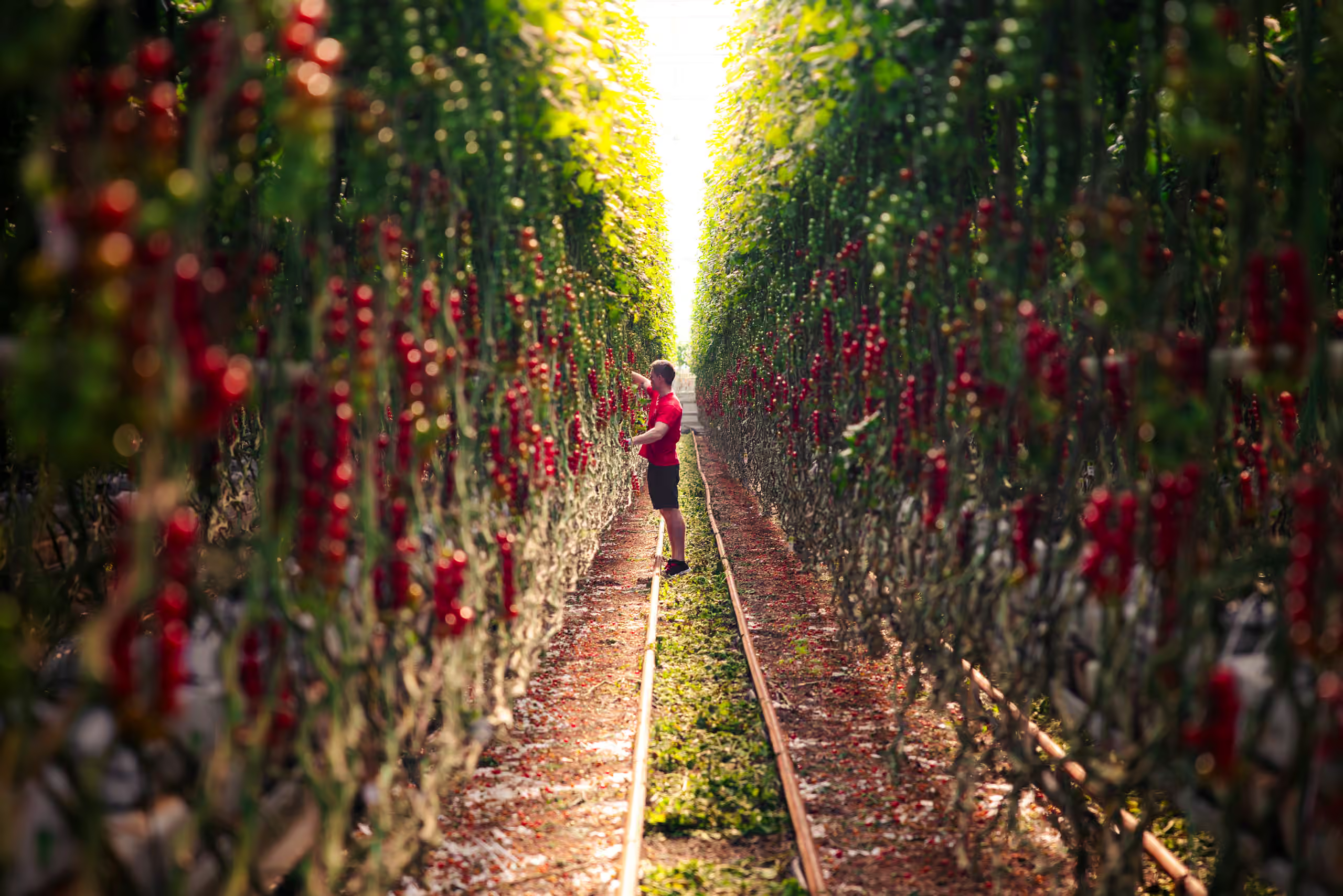
The other three areas offer significant opportunities as well. Work on resilient crops includes developing varieties that can better withstand drought, salt buildup in soils and disease, along with more sustainable crop protection. Food innovation covers alternative proteins, fermentation technologies, and cultivated meat. In greenhouse horticulture, the focus includes autonomous greenhouses, circular growing systems, and climate-neutral production. Dutch expertise and technology in these fields also have applications well beyond the Netherlands.
Turning ambition into action
The next step is to identify what each priority area needs to succeed. On December 7, a national innovation top will be held in which Dutch companies, research organizations, investors and other stakeholders will meet in the Netherlands to develop plans tied to a long-term vision. ‘We want to be clear where we aim to be in ten years and what it will take to get there,’ Erkens says. This will also include clear actions for government, businesses, research institutions and investors.’
As a follow up, an international Innovation Summit in Wageningen on May 18, 2027, will focus on attracting the investment needed to carry out those plans, held back to back with the annual F&A Next event, it will bring together international key stakeholders, companies and investors. ‘This cannot be a summit where people just exchange ideas, shake hands, and enjoy the food. We need to close deals.’
The approach goes beyond government funding. ‘Our main goal is to attract private capital. That means addressing the risks that hold investors back and creating the conditions that allow new technologies to be put to work.’ Access to funding is especially important for young companies trying to grow from startups into scale-ups. The agenda is intended to make those opportunities clearer and more appealing to investors with a supportive role of the government in creating the conditions for investment and innovation.
More space for experimentation
Regulation is another obstacle Erkens addresses. The technology may be ready for use, yet existing rules can make it sometimes difficult to deploy. He points to agricultural drones and refers to an episode of the British documentary series Clarkson’s Farm. Here a Dutch farmer described having to apply for a permit comparable to one needed to operate an airport before he could fly drones over his own farm. ‘That’s a good example of something we could probably make much simpler if we want more farmers to use drones.’
‘The agenda is about bringing together farmers, companies, researchers, and investors, but also a supportive role of governments that need to tackle obstacles and create better preconditions. We want to break down those barriers, to unleash the creative energy for innovation and earnings.’
‘We need to make our ambition clear and back it up with investment and the right conditions for success’
International partnerships and economic security
Erkens wants to position the Netherlands as ‘the Silicon Valley of Agri&Food – a place where companies can develop, test, scale and bring new technologies to market. We have what it takes: an agrifood sector that is internationally competitive and productive, with high-quality knowledge institutions, strong public-private partnerships, and a well-developed innovation infrastructure.
‘Internationally, people already recognize the Netherlands as a hub for agrifood innovation. We just haven’t been bold enough about promoting ourselves. We need to make our ambition clear and back it up with investment and the right conditions for success.’
Additionally, we need opportunities for experiments abroad, to test new technologies in different conditions, in order to make innovations available in a broader market.
International collaboration also raises economic security concerns. Erkens sees two sides to the issue. ‘Developing and using key technologies ourselves makes us less dependent on products from other countries. But we also need to be selective about who we work with, especially in areas such as agricultural AI. We need to keep in mind where the data will be stored and where the models will be developed.’
‘We keep markets open by offering the best products and helping other countries solve their problems’
International demand for Dutch expertise
Agriculture delivers essential contributions to food supply, employment, exports, and economic growth. Countries all over the world acknowledge the importance of local food production for strategic independence. International cooperation is the next step in speeding up innovation and becoming more competitive.
He points to his visit to South Korea in May, when the two countries discussed cooperation on agriculture and AI. ‘South Korea is a country with which we are more closely aligned geopolitically than some other potential partners.’ For Erkens, protecting economic security means choosing partners carefully, not shutting the door on international cooperation. ‘We can’t afford to be naive or take unnecessary risks. But a small country like ours did not become a world leader by isolating itself.’
A visit to India in late September reinforced his belief that Dutch expertise remains in demand. ‘The conversation there was mainly about how Indian companies could do more business with Dutch companies.’ Dutch technologies addressing drought and soil salinity, such as salt tolerant varieties and crops, he says, could help India tackle major agricultural challenges. ‘We keep markets open by offering the best products and helping other countries solve problems. If what we offer becomes less valuable, it becomes easier for others to shut us out.’
Minister Erkens visits to Gimje Smart Farm Innovation Valley in South Korea 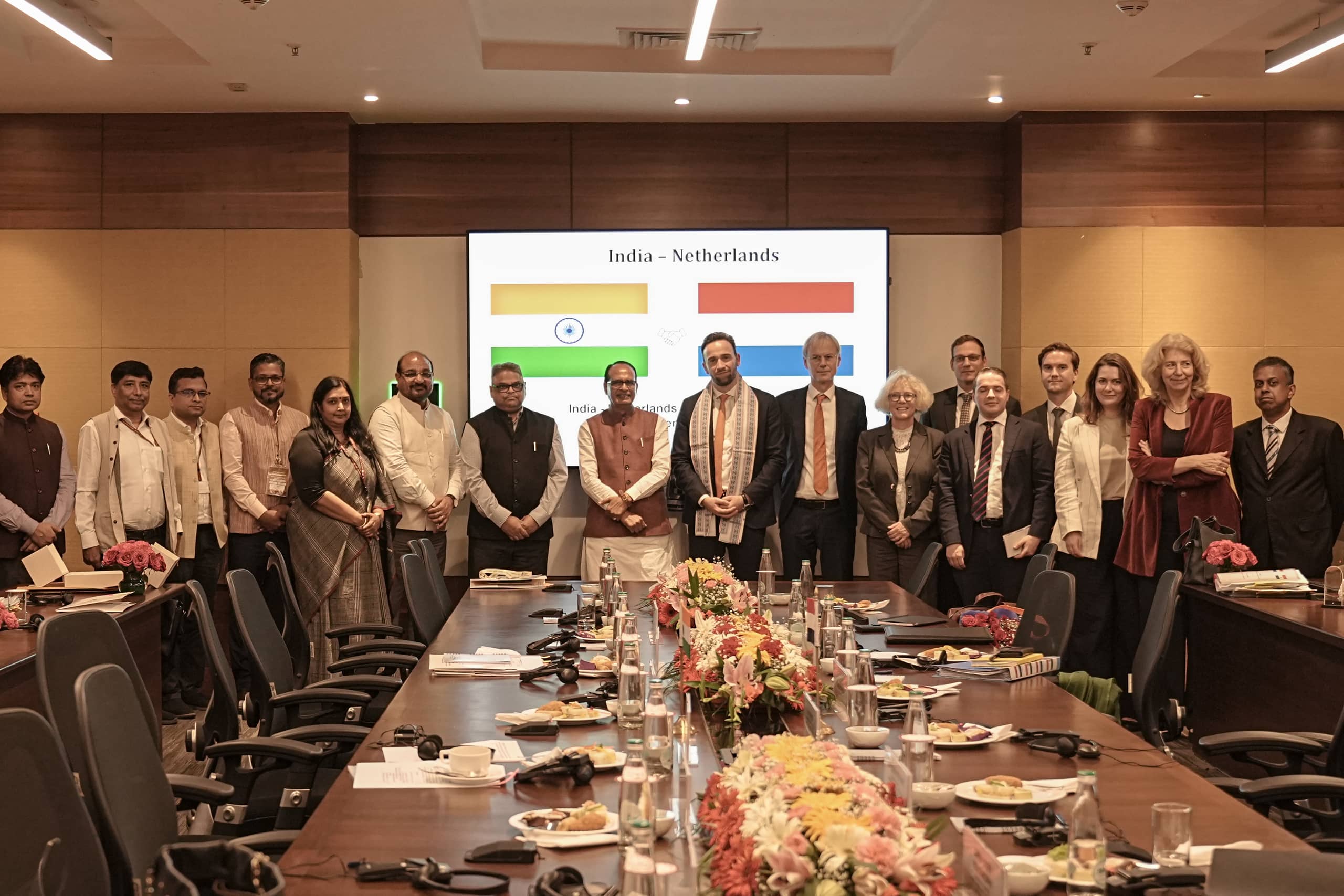
Minister Erkens met with Minister Chouhan of the Indian Ministry of Agriculture and Farmer Welfare
Connecting with the right partners
The Netherlands Agricultural Network (LAN) has a central role in putting that international strategy into practice. The teams – located at Dutch embassies and consulates general worldwide – understand local markets and identify potential investors, companies, research institutions and other partners. ‘I think their most important job is to tell our story internationally,’ Erkens says. ‘They know these markets and who might want to get involved in accelerating agrifood innovation together. We need their expertise to bring the right people to the Netherlands in May 2027 for the international innovation summit.’
The teams are already tracking developments abroad and identifying opportunities for collaboration. Erkens has requested input from the agricultural counselors and expects another targeted outreach effort. ‘We want to hear their ideas and work together to identify the contacts we should pursue.
Over time, Erkens is convinced these connections will lead to international partnerships in both directions: investors providing necessary budget, innovative companies developing and testing agrifood innovations and bringing their technologies and expertise to overseas markets. When asked what he hopes the sector will look like in ten years, he keeps his answer short: ‘I want us to lead the world in all four areas, with innovation flourishing and entrepreneurs earning good returns. That would be good for the Netherlands and the global agrifood sector.’
More information
You can read more about the Dutch Agrifood Innovation Agenda in the interview with the LVVN Director of Strategy, Knowledge and Innovation in this Agrospecial.
For more information about the Agenda in general, you can contact Simone Eijsink (s.eijsink@minlnv.nl). If you want to know more about international innovation cooperation related to the Agenda, you may contact Willemien van Asselt (w.h.vanasselt@minlnv.nl).