
WUR calls for investment in agrifood innovation
President of the executive board Sjoukje Heimovaara: ‘Dutch agrifood strength cannot be taken for granted’
The Netherlands owes much of its strong international agrifood position to the close links between research, business, government, and practice. That model still gives the country an edge, says Sjoukje Heimovaara, President of WUR’s Executive Board, but it needs to keep evolving to keep its position. Climate change, biodiversity loss, geopolitical tensions, and rapid technological change are reshaping agriculture and food production. For Heimovaara, the Dutch Ministry of Agriculture, Fisheries, Food Security and Nature’s new Agrifood Innovation Agenda comes at the right moment.
Beeld: © Marit Hazebroek
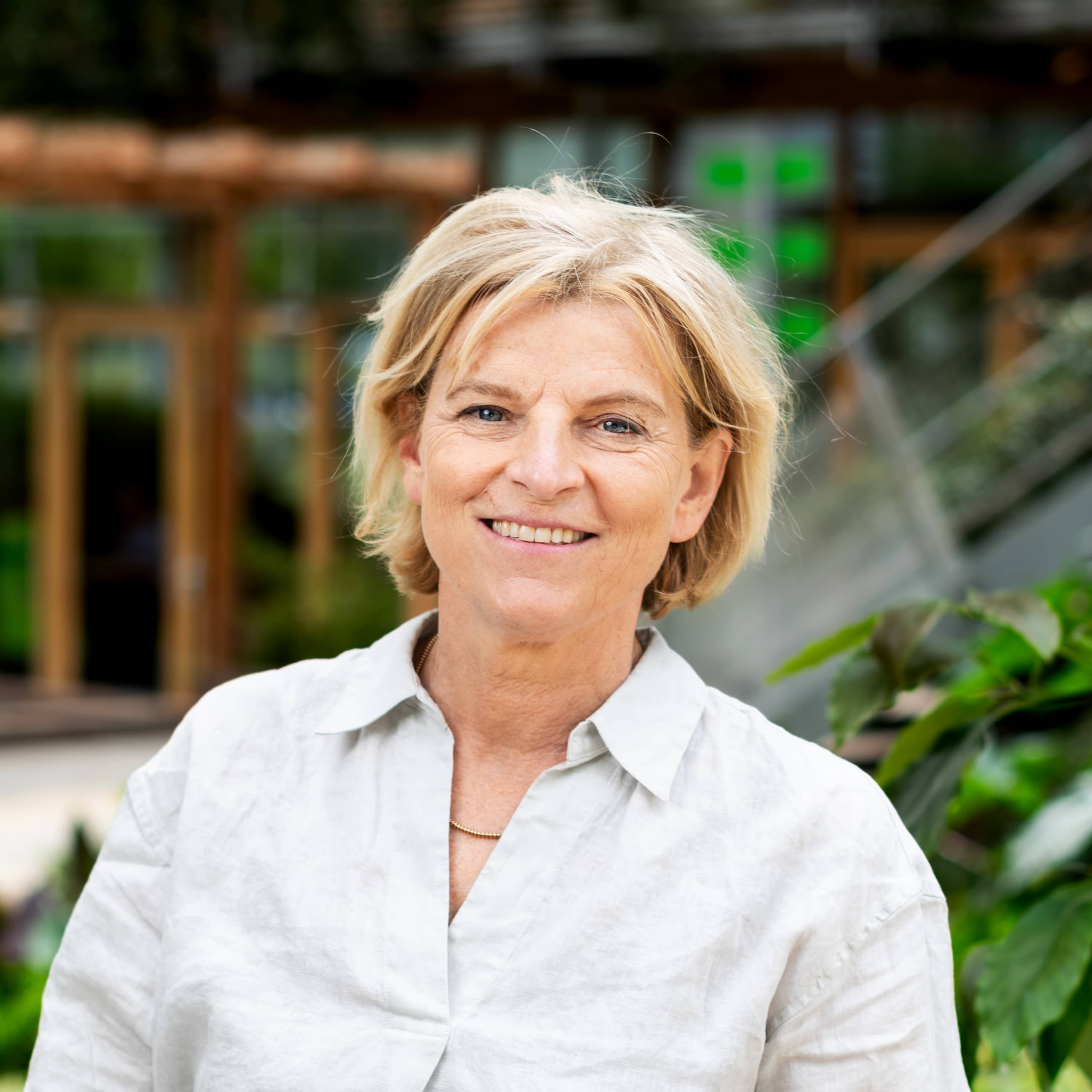
Sjoukje Heimovaara
Heimovaara sees the exchange between research and business as one of the country’s main strengths. ‘The Dutch agrifood sector has an exceptionally strong knowledge base, and many of our companies are international leaders,’ she says. ‘For us at WUR, that close relationship with industry is crucial. We bring research and expertise; companies bring practical questions, experience, and their own knowledge. That exchange keeps both sides moving forward.’
Uncertainty about the long-term direction of Dutch agrifood is slowing investment in parts of the sector. ‘I feel we have been standing still for too long, and that worries me,’ Heimovaara says. ‘Companies do not always have the confidence or resources to invest in innovation, while funding for basic research and the wider knowledge infrastructure is under pressure. This comes at a time of rapid advances in the so-called BRAIN technologies: biotechnology, robotics, artificial intelligence, and nanotechnology.’
Heimovaara also identifies three wider developments affecting agriculture and food production. ‘For me, three developments stand out. First, climate change and biodiversity loss. I mention them first because they are the biggest, longest-term challenges we must deal with. Second, geopolitics. It gets more immediate attention because it feels more urgent, while climate and biodiversity can slip into the background even though their impact will last much longer. And third, technology, especially digital technology, and AI.’
Beeld: © WUR
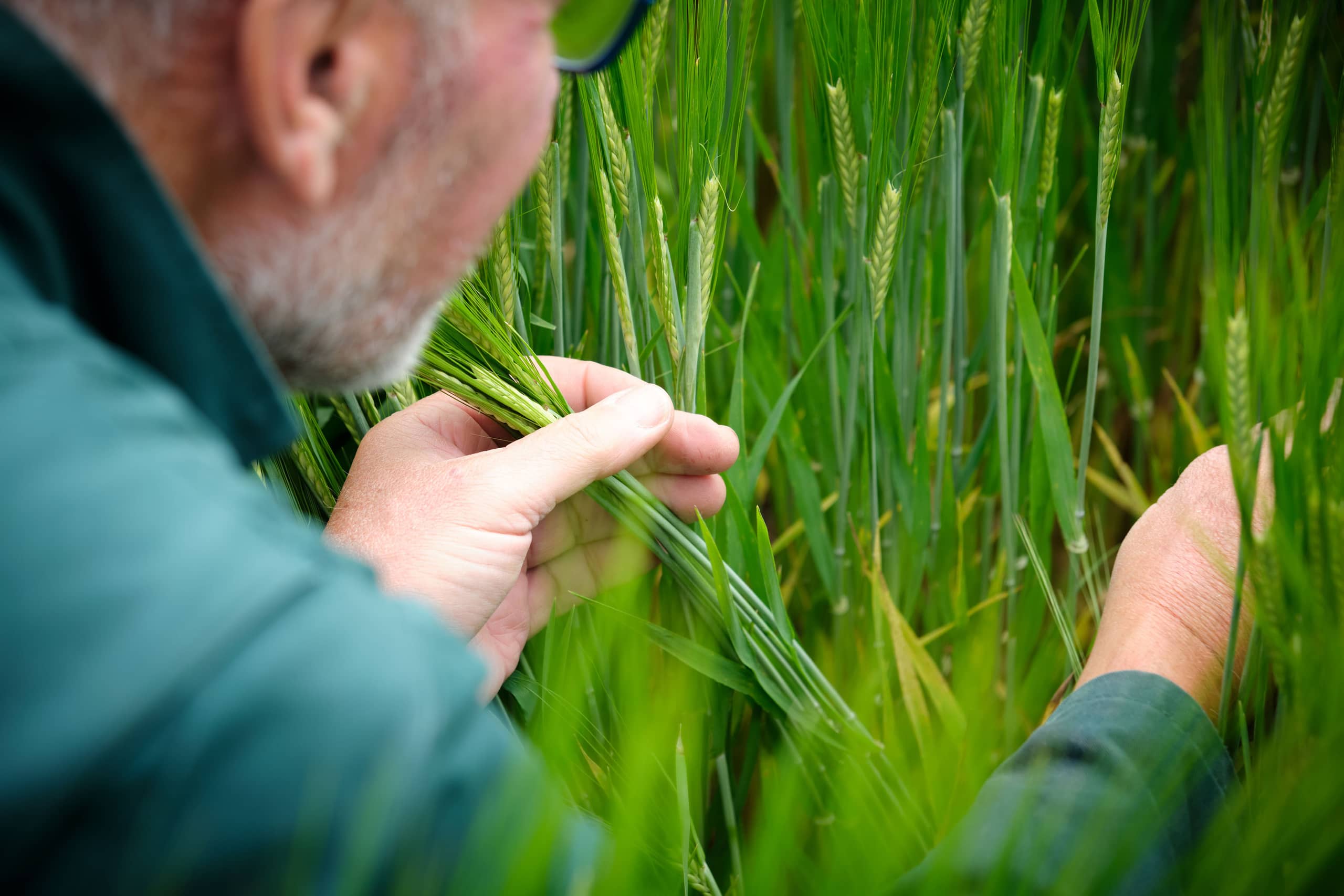
Research into barley at WUR
Building on what the Netherlands already has
These developments already shape WUR’s research agenda. Climate change brings questions about water, biodiversity, and land use; geopolitics exposes long-standing dependencies in the Dutch food system. ‘We have been warning for years that we rely heavily on imports of feed, energy, and fertilizers. Geopolitical events are now making those dependencies very real.’
‘Western politics is not particularly good at long-term thinking. Nitrogen is a good example. We have been dealing with it for forty years. Measures are introduced, then replaced, then partly reversed again. For a knowledge institution, it is frustrating to watch that happen.’
Renewed focus on innovation
But these shifts also create opportunities. Heimovaara welcomes the renewed focus on innovation in Dutch agricultural policy. ‘What I like about the new Agrifood Innovation Agenda is that it brings solutions to certain problems but also looks beyond that. It asks where the opportunities are and how we can build on them.’
WUR did not write the LVVN agenda, but it did help the thinking behind it. For example, Heimovaara was among the signatories of the Voedselmanifest 2050, published in November 2025. ‘The manifesto calls for a long-term national food policy, developed jointly by government and the agrifood sector.’
In addition, WUR helped coordinate Food 2040 -alongside the province of Gelderland, local authorities, businesses, education partners and other knowledge institutions - as input to Peter Wennink’s national advice on Dutch competitiveness. ‘We asked the sector what it needed to grow, identified common priorities, and brought them together. The focus was on future earning capacity,’ Heimovaara explains.
Food 2040 proposes three technology flagships: biotechnology for plant and animal breeding, bio- and process technology for new ingredients, and robotics and AI in agriculture and horticulture. A fourth focuses on talent and infrastructure through a separate investment program. Companies also identified barriers to investment, from regulations to grid congestion. ‘We asked what was getting in their way. The detailed list was shared with Wennink, but we agreed with the companies not to publish it,’ Heimovaara says.
Across these proposals, the BRAIN technologies are a recurring priority. ‘The real opportunity is where those technologies meet sectors in which the Netherlands is already strong. Think of biotech and AI in plant or animal breeding, or biotech and robotics in food production.’
‘Dutch knowledge and industry are ready to invest in AgTech innovation’
Technology needs people
For Heimovaara, knowledge has value in its own right. ‘Knowledge also has value even when it is not used,’ she says. Applying new technologies requires companies with the capacity and expertise to do so. ‘People often design all kinds of ways to valorize research, but the main thing you need is a sector that can absorb it. You need people who understand the technology and companies that are equipped to use it.’
‘The Dutch agrifood sector is still able to adopt new technologies, but it needs more than a short-term boost. Heimovaara sees two priorities that must go hand in hand: a clear, long-term government vision to give companies the confidence to invest in innovation, and sustained funding for basic knowledge and the research infrastructure. ‘Our sector is still strong - but not if we carry on like this. Give it clarity and a serious push, and we can at least maintain a leading position. And this is not about investing in Wageningen alone. It means investing in knowledge, getting regulations to work together instead of against each other, and investing in talent.’
Beeld: © WUR
That talent must come from across the education system. ‘We need people at every level: vocational education, universities of applied sciences and universities. The combination of agriculture, the green sector and technology is where we will need a lot of people in the years ahead.’
The challenge does not stop with new graduates. ‘A lot of people already working in the sector will need to build new skills in areas such as robotics and AI. We need to make room for lifelong learning as well.’ Pressure on international student numbers and the difficulty of attracting enough Dutch students into technical and agricultural programs only add to the challenge.
Competing by cooperating
None of this means the Netherlands should turn inward. Competitiveness and international cooperation go hand in hand, Heimovaara stresses. ‘The Wennink agenda is about competitiveness: in what sectors is the Netherlands strong, and where do we want to compete? But that doesn’t mean you stop working with others.’
Robotics and AI are good examples. ‘We want to work with the places where the real advances are happening. Some of that happens here, and a lot happens, for instance, in China, the United States and the United Kingdom. Working together is how you stay at the top of your game. If we keep feeding a strong Dutch agrifood sector with the best knowledge and technology from around the world, that is a competitive advantage.’
‘We have to move towards balanced international partnerships and learn from each other’
The Netherlands Agricultural Network opens doors
Heimovaara says that international exchange is already part of WUR’s daily work. Research, education and applied projects take place around the world, often with support from the Netherlands Agricultural Network (LAN). ‘We work internationally all the time, and we know the LAN teams well, as well as others at the embassies. They are important partners in many of those projects.’
‘China is one example, through long-standing cooperation with the Chinese Academy of Agricultural Sciences and China Agricultural University. In Indonesia, WUR works on more sustainable palm oil production and more efficient land use. In Ethiopia, projects include improving logistics for perishable products such as bananas, and avocados. If a country wants to develop trade, logistics is often one of the first things that must work. These are exactly the kinds of projects where the agricultural counselors and their teams can make a real difference.’
‘The network’s value goes beyond introductions. The LAN teams know the local government, research institutes and businesses in their countries and help Dutch partners understand the context. You cannot build strong international partnerships without good support on the ground.’
Beeld: © WUR
From bringing knowledge to learning together
WUR increasingly wants those partnerships to be two-way. Heimovaara calls them balanced partnerships. ‘The starting point is: what can we learn from each other? How can we work together? And how do we make sure that knowledge reaches the field and the people who can use it?’
That matters more as climate change brings problems to the Netherlands that other countries have been dealing with for years. ‘Sometimes our reality is starting to look like reality other countries already know. Salinization is a good example. With drought and changing water conditions, it is becoming a serious issue in our polders. Bangladesh has been dealing with salinization for years. We have researched it together, and some of that knowledge is now directly relevant in the Netherlands.’
The same applies to cooperation with Egypt on water management, drought and salinization. ‘We have something to offer them, but they have things to teach us as well.’ This also changes the questions researchers ask. ‘For a long time, the question was: given all the resources we have, how can we become more efficient? Increasingly, it is: given that resources are limited, how do we make the best use of them? Other countries have been dealing with those limits for much longer. There is a lot we can learn from that.’
LAN can help make that exchange work in practice. ‘We need the agricultural counselors to open doors to local governments, research institutes and industry. That role is becoming more important, not less.’
More than one discipline
Heimovaara also points to another strength of WUR: it brings many disciplines together around the same domain. ‘Our focus is agrifood and the green domain, but we look at it from every angle – economics, biology, social sciences, technology and much more.’
That breadth matters when the problems themselves cut across disciplines. ‘You are not going to solve nitrogen by doing chemical calculations alone. You also need economics and social dimensions. The same goes for climate and geopolitics. You need people who understand trade, agricultural history and how food is produced.’
That combination – a strong sector, deep knowledge, multiple disciplines, and international links – is what has given the Netherlands its position in agrifood. Maintaining it will depend on keeping those connections alive and continuing to invest in them. ‘That is something we can be proud of – and something we should protect.’